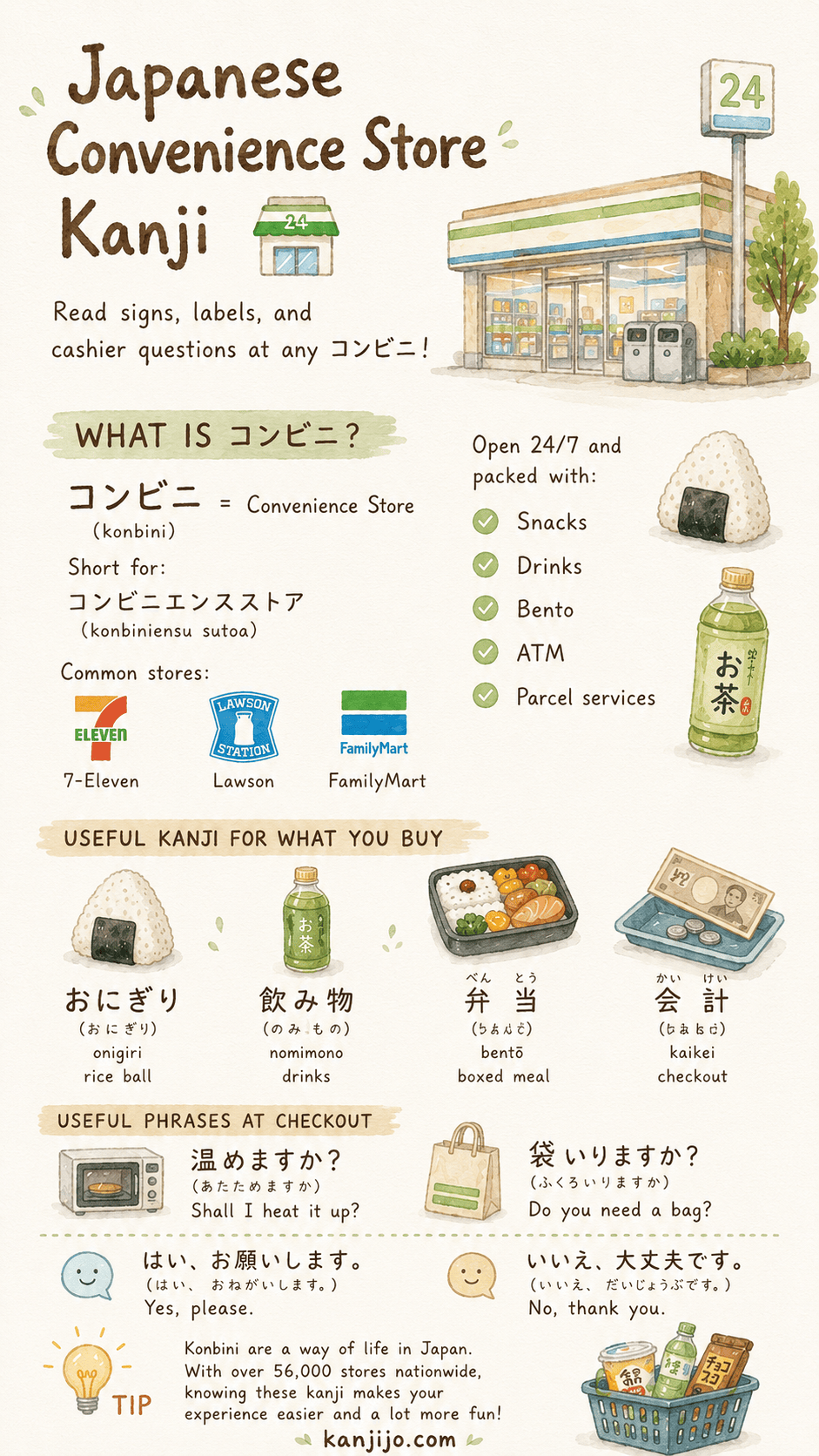
Japanese convenience stores - コンビニ (konbini) - are a way of life. Open 24/7, they sell everything from fresh meals to concert tickets to emergency underwear. With over 56,000 locations across Japan, you’ll likely visit one multiple times a day. Understanding the kanji on products, signs, and services transforms the konbini from a confusing maze into your best friend.
Food Label Kanji: 食品ラベル
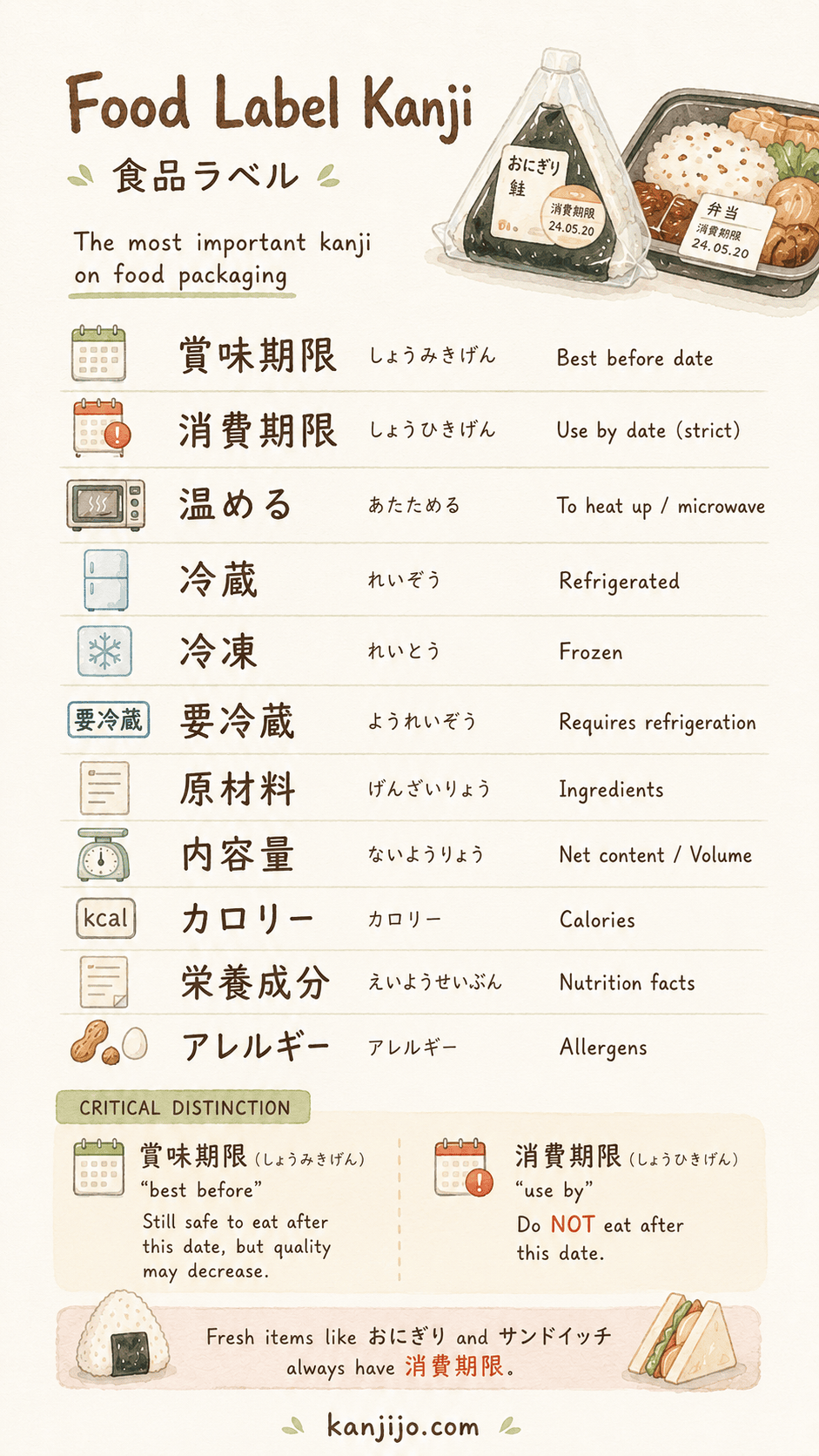
The first thing you’ll reach for at a konbini is food. Here are the most important kanji on food packaging:
| Kanji | Reading | Meaning |
|---|---|---|
| 賞味期限 | しょうみきげん | Best before date |
| 消費期限 | しょうひきげん | Use by date (strict) |
| 温める | あたためる | To heat up / microwave |
| 冷蔵 | れいぞう | Refrigerated |
| 冷凍 | れいとう | Frozen |
| 要冷蔵 | ようれいぞう | Requires refrigeration |
| 原材料 | げんざいりょう | Ingredients |
| 内容量 | ないようりょう | Net content / Volume |
| カロリー | カロリー | Calories |
| 栄養成分 | えいようせいぶん | Nutrition facts |
| アレルギー | アレルギー | Allergens |
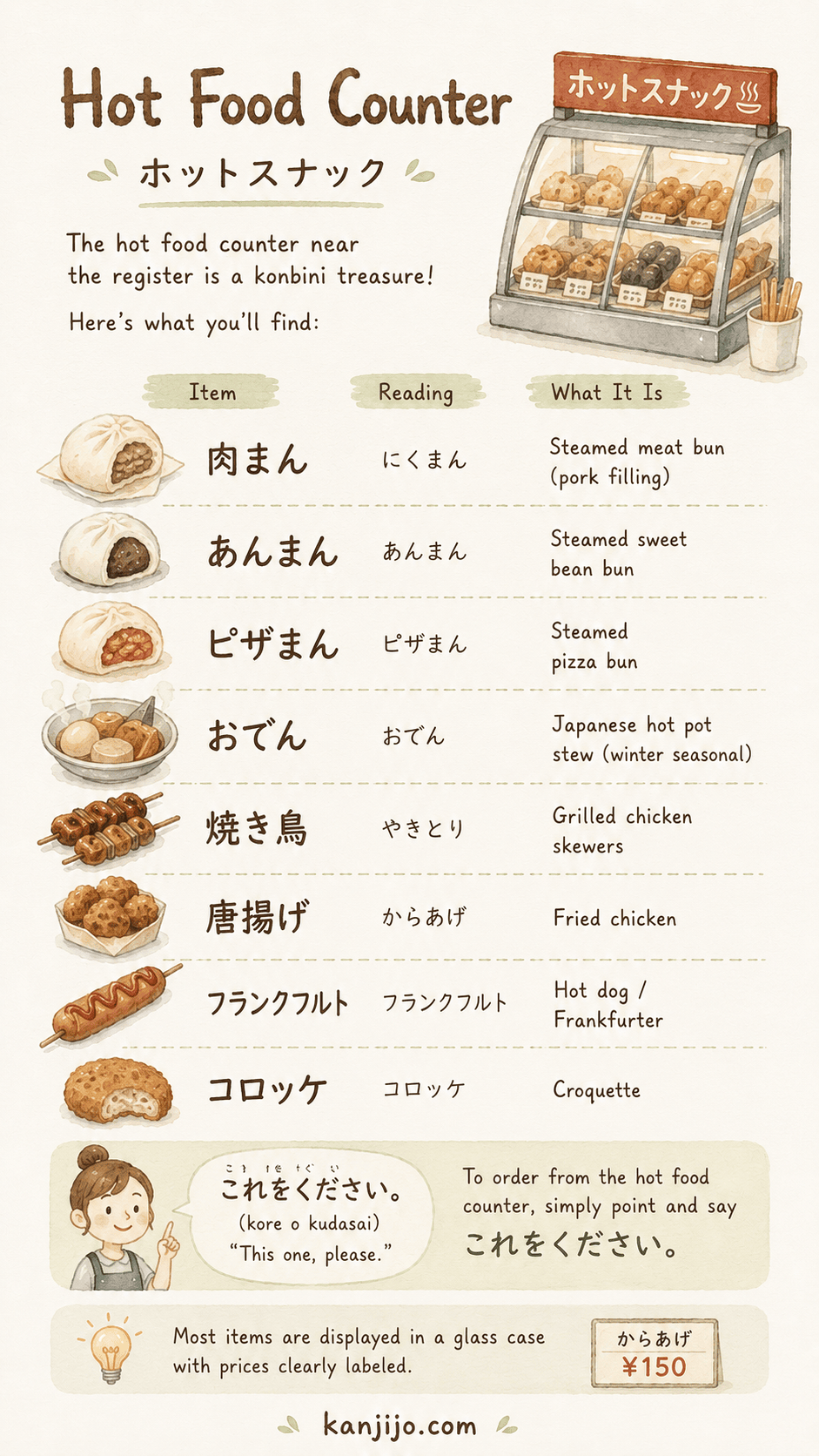
Hot Food Counter: ホットスナック
The hot food counter near the register is a konbini treasure. Here’s what you’ll find:
| Item | Reading | What It Is |
|---|---|---|
| 肉まん | にくまん | Steamed meat bun (pork filling) |
| あんまん | あんまん | Steamed sweet bean bun |
| ピザまん | ピザまん | Steamed pizza bun |
| おでん | おでん | Japanese hot pot stew (winter seasonal) |
| 焼き鳥 | やきとり | Grilled chicken skewers |
| 唐揚げ | からあげ | Fried chicken |
| フランクフルト | フランクフルト | Hot dog / Frankfurter |
| コロッケ | コロッケ | Croquette |
To order from the hot food counter, simply point and say これをください (kore o kudasai, “This one, please”). Most items are displayed in a glass case with prices clearly labeled.
Drink Section: 飲み物コーナー
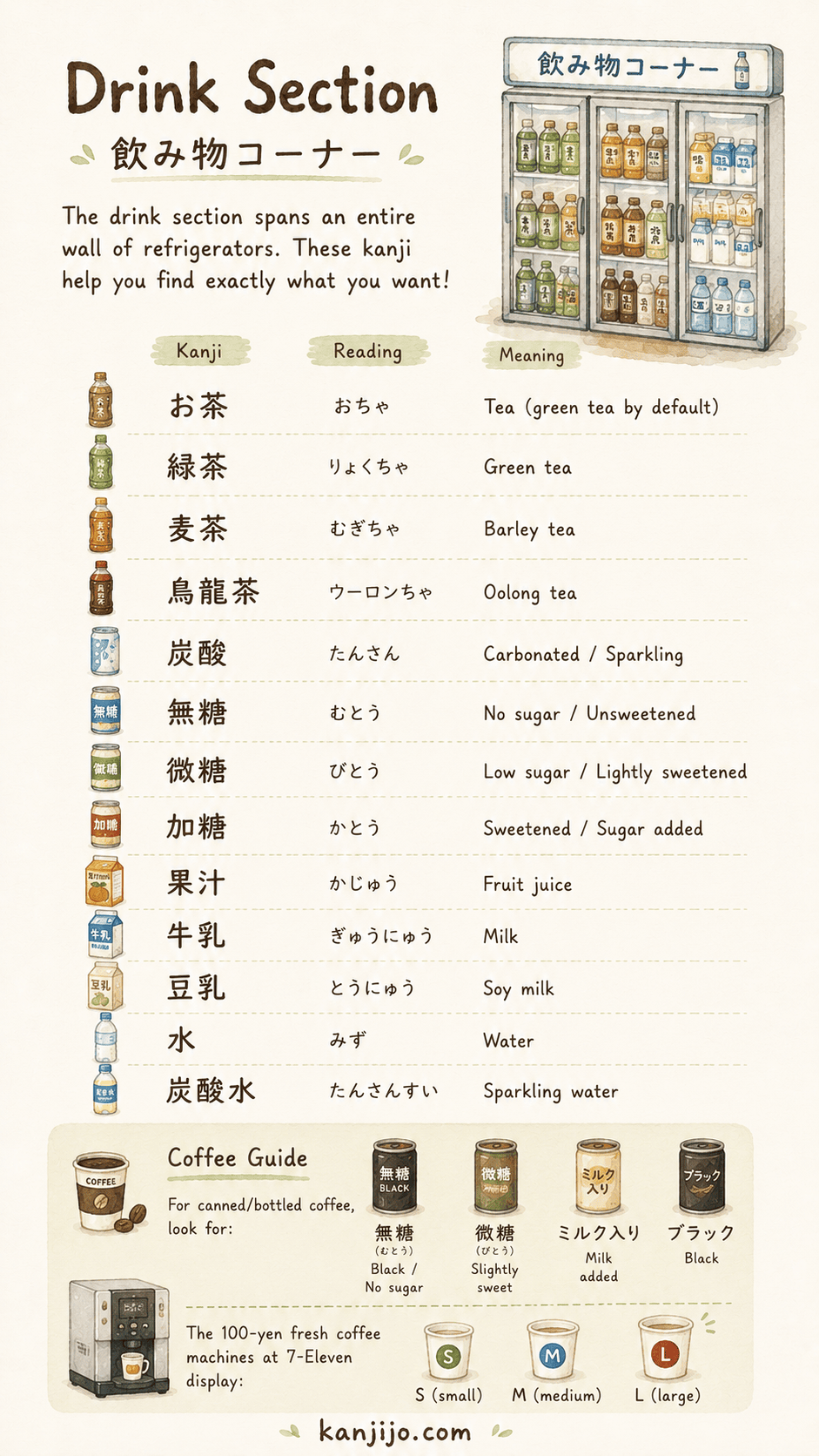
The drink section spans an entire wall of refrigerators. These kanji help you find exactly what you want:
| Kanji | Reading | Meaning |
|---|---|---|
| お茶 | おちゃ | Tea (green tea by default) |
| 緑茶 | りょくちゃ | Green tea |
| 麦茶 | むぎちゃ | Barley tea |
| 烏龍茶 | ウーロンちゃ | Oolong tea |
| 炭酸 | たんさん | Carbonated / Sparkling |
| 無糖 | むとう | No sugar / Unsweetened |
| 微糖 | びとう | Low sugar / Lightly sweetened |
| 加糖 | かとう | Sweetened / Sugar added |
| 果汁 | かじゅう | Fruit juice |
| 牛乳 | ぎゅうにゅう | Milk |
| 豆乳 | とうにゅう | Soy milk |
| 水 | みず | Water |
| 炭酸水 | たんさんすい | Sparkling water |
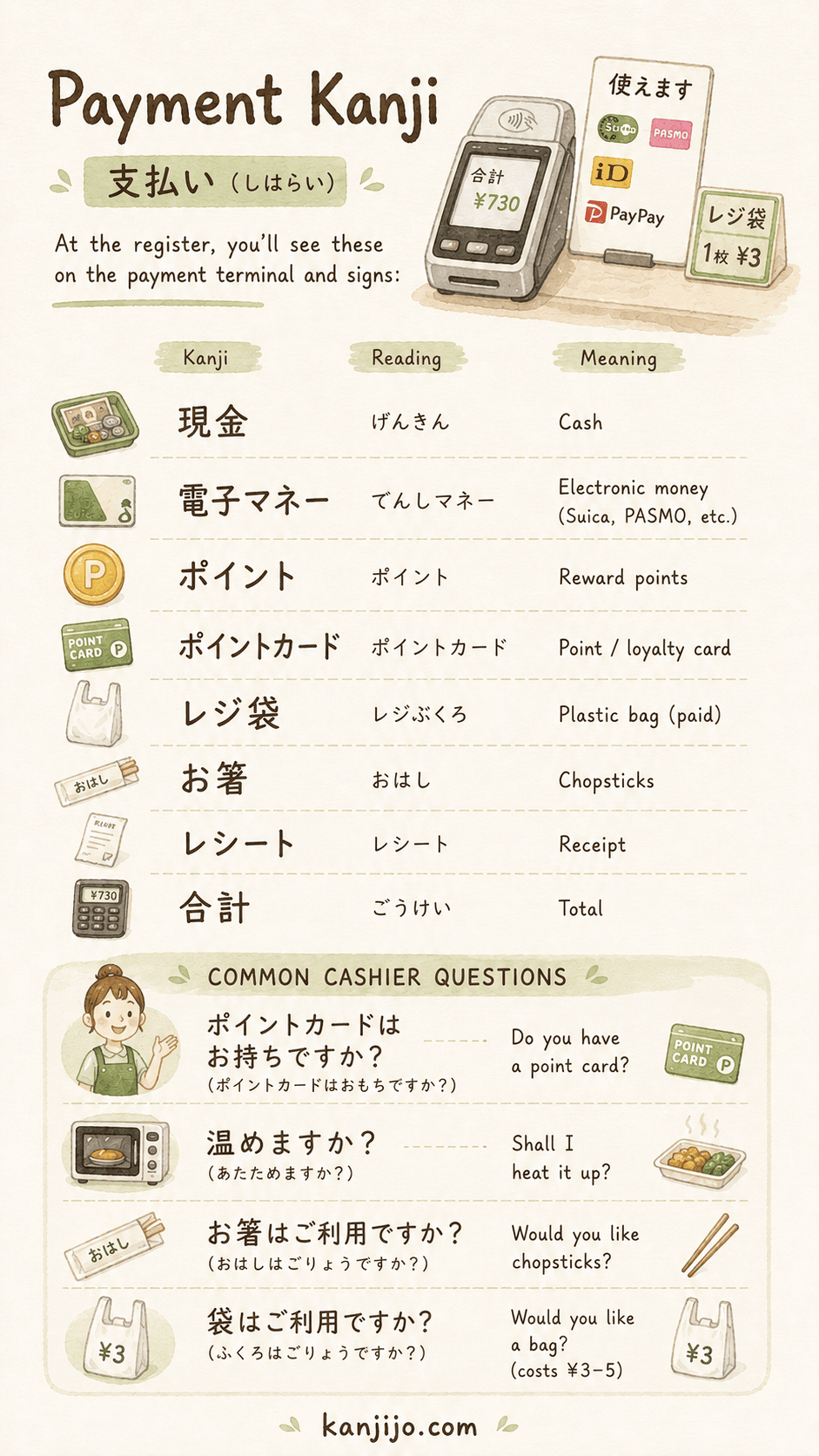
Payment Kanji: 支払い
At the register, you’ll see these on the payment terminal and signs:
| Kanji | Reading | Meaning |
|---|---|---|
| 現金 | げんきん | Cash |
| 電子マネー | でんしマネー | Electronic money (Suica, PASMO, etc.) |
| ポイント | ポイント | Reward points |
| ポイントカード | ポイントカード | Point/loyalty card |
| レジ袋 | レジぶくろ | Plastic bag (paid) |
| お箸 | おはし | Chopsticks |
| レシート | レシート | Receipt |
| 合計 | ごうけい | Total |
The cashier will ask several standard questions. Here are the most common:
- ポイントカードはお持ちですか? - “Do you have a point card?”
- 温めますか? - “Shall I heat it up?”
- お箸はご利用ですか? - “Would you like chopsticks?”
- 袋はご利用ですか? - “Would you like a bag?” (costs ¥3–5)
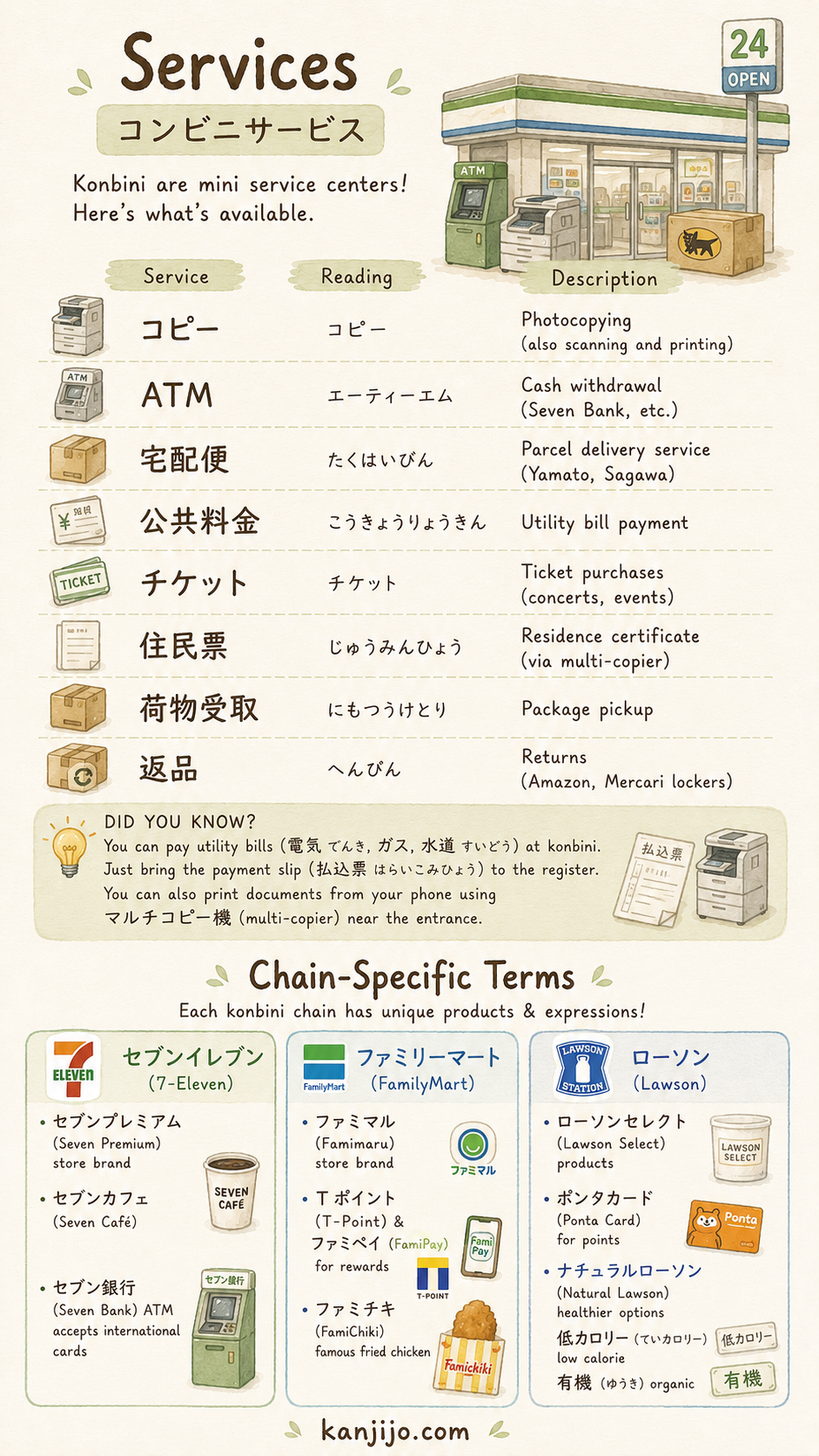
Services: コンビニサービス
Konbini are mini service centers. Here’s what’s available and the kanji you’ll see:
| Service | Reading | Description |
|---|---|---|
| コピー | コピー | Photocopying (also scanning and printing) |
| ATM | エーティーエム | Cash withdrawal (Seven Bank, etc.) |
| 宅配便 | たくはいびん | Parcel delivery service (Yamato, Sagawa) |
| 公共料金 | こうきょうりょうきん | Utility bill payment |
| チケット | チケット | Ticket purchases (concerts, events) |
| 住民票 | じゅうみんひょう | Residence certificate (via multi-copier) |
| 荷物受取 | にもつうけとり | Package pickup |
| 返品 | へんぴん | Returns (Amazon, Mercari lockers) |
Chain-Specific Terms
Each konbini chain has its own branded products and unique expressions:
セブンイレブン (7-Eleven): Look for セブンプレミアム (Seven Premium) store brand products and the fresh coffee machine labeled セブンカフェ. Their ATMs are operated by セブン銀行 (Seven Bank) and accept international cards.
ファミリーマート (FamilyMart): Their store brand is ファミマル. They use Tポイント (T-Point) and ファミペイ (FamiPay) for rewards. Don’t miss their famous ファミチキ (FamiChiki, fried chicken).
ローソン (Lawson): Look for ローソンセレクト (Lawson Select) products and ポンタカード (Ponta Card) for points. ナチュラルローソン (Natural Lawson) stores focus on healthier options with labels like 低カロリー (ていカロリー, low calorie) and 有機 (ゆうき, organic).
Related Reading on Kanjijo
- 50 Kanji Signs You See Every Day in Japan
- Japanese Food Vocabulary: A Complete Guide
- Kanji at Japanese Supermarkets
- Japanese Travel Phrases & Kanji Guide
- First 24 Hours in Japan: 52 Kanji Signs, In Order
- The Kanji on Your Air Conditioner: Reading Japanese Appliances
- Free test: can you read the signs in Japan?
- What the konbini clerk says (N5), and the two answers you need
- Ordering at a Japanese Café: What the Staff Say, and What to Answer
- Practise the konbini checkout by ear: free simulator
Frequently Asked Questions
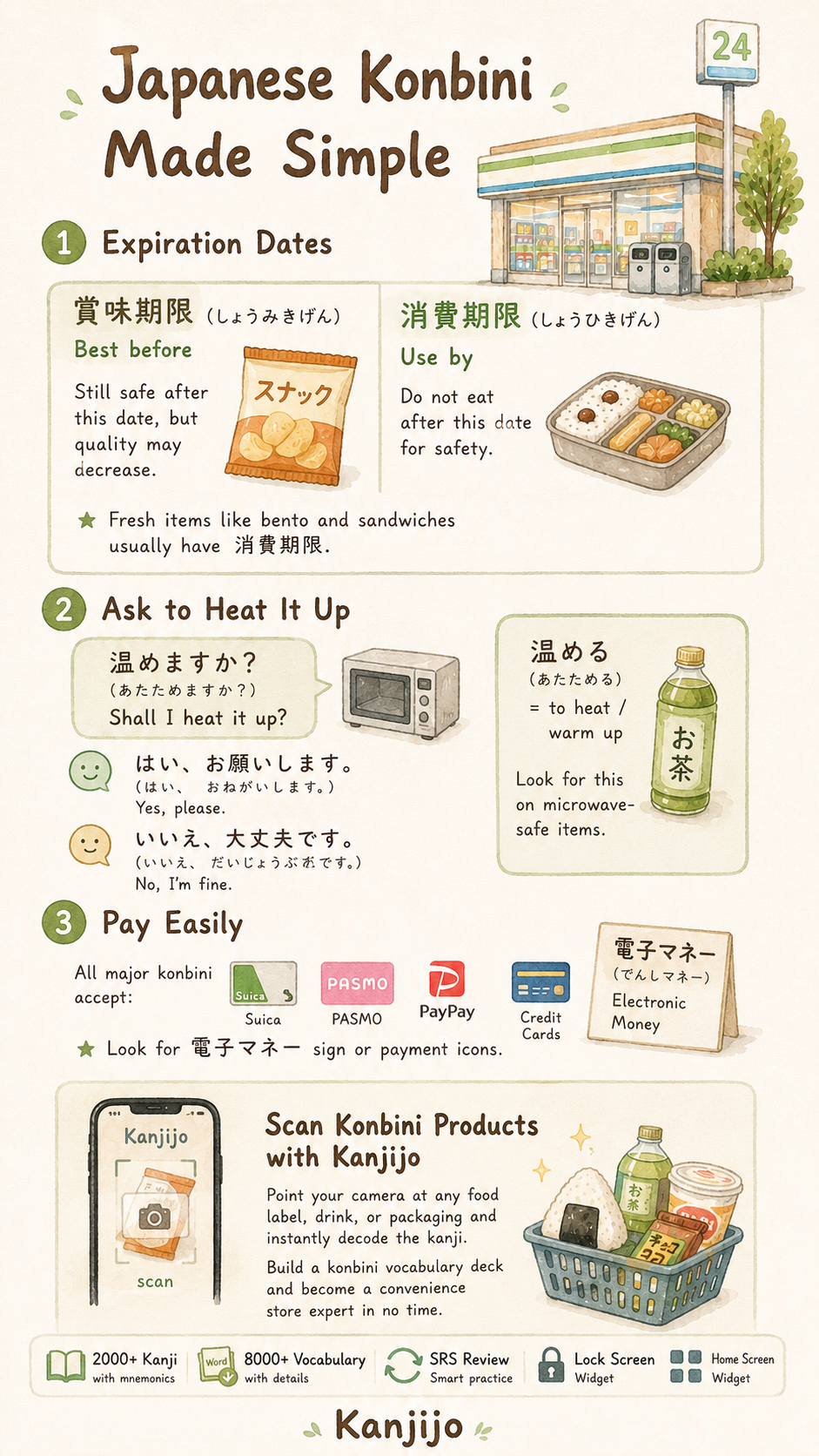
賞味期限 (しょうみきげん) is the “best before” date - the food is still safe after this date but may lose quality. 消費期限 (しょうひきげん) is the “use by” date - the food should not be consumed after this date for safety reasons. Fresh items like bento and sandwiches typically have 消費期限.
The cashier will typically ask 温めますか?(あたためますか?, “Shall I heat it up?”). Simply reply はい、お願いします (yes, please) or いいえ、大丈夫です (no, I’m fine). The kanji 温める (あたためる) means “to heat/warm up” and appears on microwave-safe packaging.
Yes, all major convenience store chains (7-Eleven, FamilyMart, Lawson) accept various 電子マネー (でんしマネー, electronic money) including Suica, PASMO, PayPay, and credit cards. Look for the 電子マネー sign at the register or the payment terminal icons showing accepted methods.
Scan Konbini Products with Kanjijo
Point your camera at any food label, drink, or packaging and instantly decode the kanji. Build a konbini vocabulary deck and become a convenience store expert in no time.
Download Kanjijo Free