Here’s the moment every kanji learner has had: you studied 100 kanji last month. You felt confident. You moved on to the next batch. Three weeks later, you see one of those “learned” kanji in the wild and your brain returns a perfect blank.
You didn’t fail. The method failed you.
What you were doing was almost certainly only one half of how memory actually works. And it doesn’t matter how many hours you put in if you’re only doing one half.
This article is about the two halves - passive exposure and active recall - why they’re both necessary, why neither is enough alone, and how to build a system that combines them so kanji finally sticks.
The Two Modes of Memory
Cognitive science divides memory engagement into two fundamentally different modes:
| Passive Exposure | Active Recall | |
|---|---|---|
| Effort required | None | Significant |
| What it builds | Recognition (“I’ve seen this”) | Memory (“I can produce this”) |
| Feels like studying? | Barely | Yes |
| Strengthens retrieval pathways? | Weakly | Strongly |
| Daily volume possible | 200+ exposures | 30–50 retrievals |
| Risk if used alone | Recognition without recall | Burnout, queue overflow |
Notice the trap: passive exposure feels effortless and produces a comfortable feeling of progress. But it builds recognition, not recall. Active recall feels hard and uncomfortable, but it’s what actually moves information into long-term memory.
Why Passive-Only Fails
This is the failure mode of most learners who watch a lot of anime, read a lot of manga, or scroll Japanese Twitter without studying actively.
You’ve seen 山 a thousand times. You recognize it instantly. You feel like you know it. Then someone asks “What’s the kanji for ‘mountain’?” and your brain refuses to produce it. You can recognize it but you can’t recall it.
This is called the recognition–recall gap, and it’s the single most common reason advanced learners feel stuck. They have a huge passive vocabulary and a tiny active one.
Why Active-Only Fails
This is the failure mode of the dedicated Anki / WaniKani learner who has 200+ daily reviews and still feels exhausted and slow.
Active recall is metabolically expensive. Each retrieval is a small mental exertion. Stack too many in a single session and your brain hits diminishing returns - fatigue makes new encoding worse, not better. Worse, when reviews are confined to a single 30-minute session per day, the kanji are out of mind for the other 23.5 hours, and the forgetting curve does its work.
Active-only learners burn out at predictable rates. The reviews pile up. Motivation crashes. They quit, then come back, then quit, then come back. The cycle is exhausting.
The Dual-Loop System
The solution that the cognitive science literature points to - and that almost no language app actually implements - is a dual-loop system:
- Loop A (passive): Continuous low-effort exposure to the kanji your SRS algorithm says are most at risk of being forgotten.
- Loop B (active): Brief, frequent, deliberate retrieval practice on those same kanji.
The two loops feed each other. Passive exposure in Loop A primes the kanji, making the active recall in Loop B easier and more accurate. Successful active recall in Loop B strengthens the memory trace, so when the kanji shows up passively again in Loop A, the brain recognizes it deeper.
This dual-coding approach is dramatically more efficient than either loop alone. Studies on dual coding theory (Paivio, 1986) and retrieval practice (Roediger & Karpicke, 2006) consistently show 1.5–2x retention improvement when verbal/visual passive exposure is paired with active recall, compared to either modality alone.
How Kanjijo Implements Both Loops
Kanjijo was designed around this exact two-loop architecture. Most other apps do one or the other. Kanjijo runs both, simultaneously, off the same SRS engine.
Loop A - Passive Exposure (Widgets)
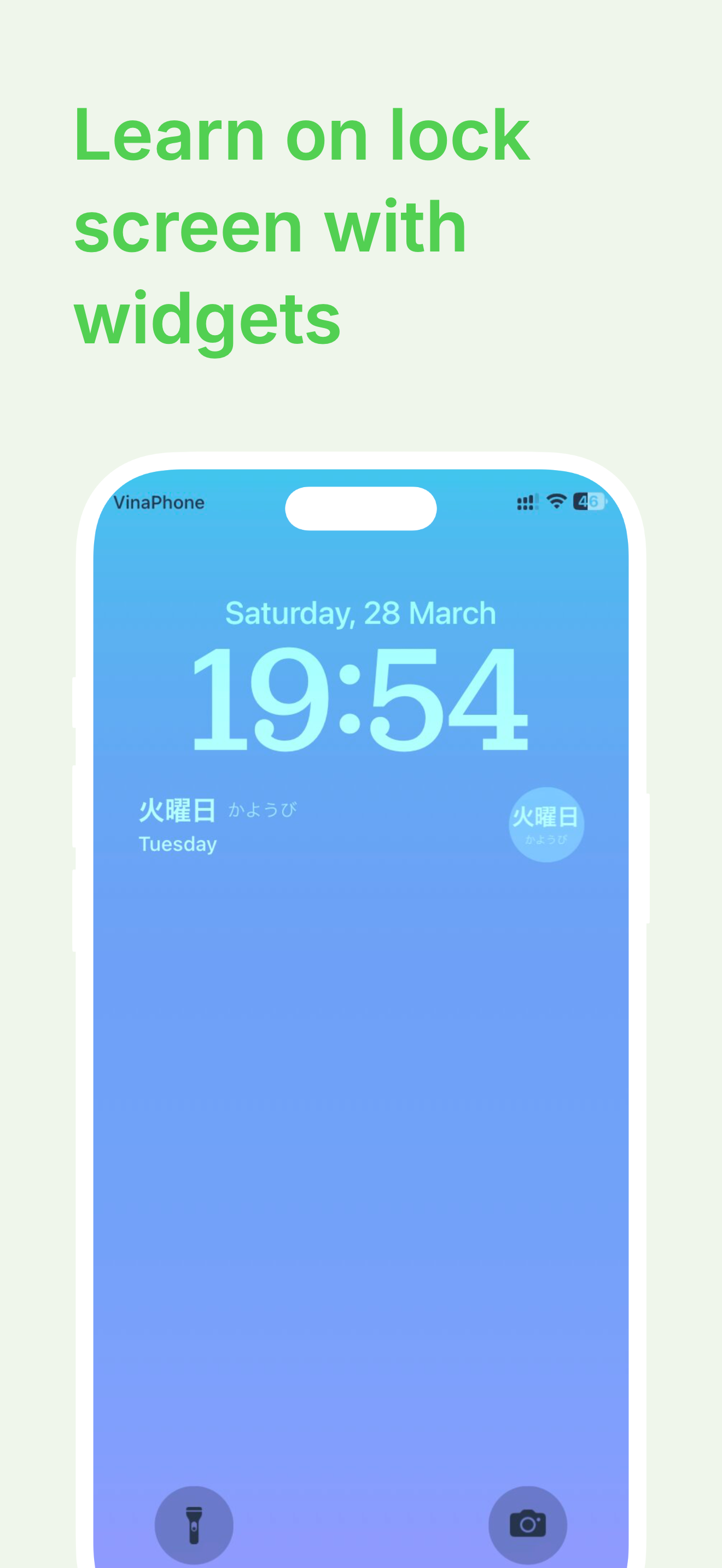
The lock screen widget cycles through the kanji your SRS algorithm has flagged as most at risk of being forgotten today. Every phone glance is a low-effort impression on exactly the cards your brain needs reinforced.
200+ phone glances per day × passive impression on at-risk kanji = continuous Loop A reinforcement, no effort required.
Loop B - Active Recall (Quiz Widget + SRS Flashcards)
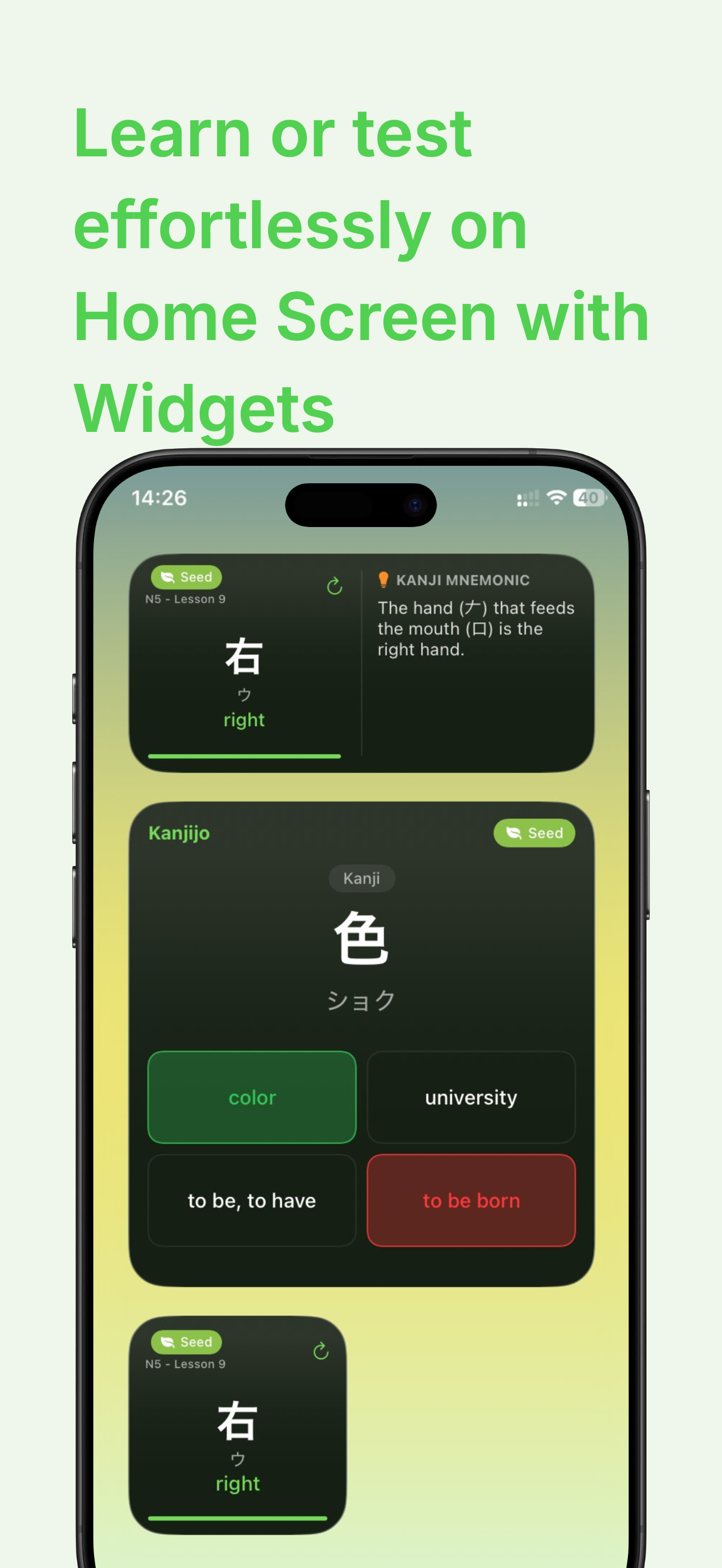
The home screen quiz widget asks multiple-choice questions on the same kanji. The SRS flashcard mode in the app demands free-recall before showing the answer. Both are active recall - they require retrieval before reinforcement.
The shared engine
Critically, both loops draw from the same SRS deck. Whatever is on the lock screen widget right now is also what the quiz widget is asking about, and what the in-app review session will surface next. The reinforcement is coherent, not scattered.
The Mnemonic Layer: Why Kanjijo Is Faster
Beyond the dual loop, Kanjijo adds a third element that turbocharges both: mnemonics.
Pure rote SRS works, but slowly. Adding a mnemonic - a memorable mental image that connects the radical components of a kanji to its meaning and reading - accelerates initial encoding by 2–3x.
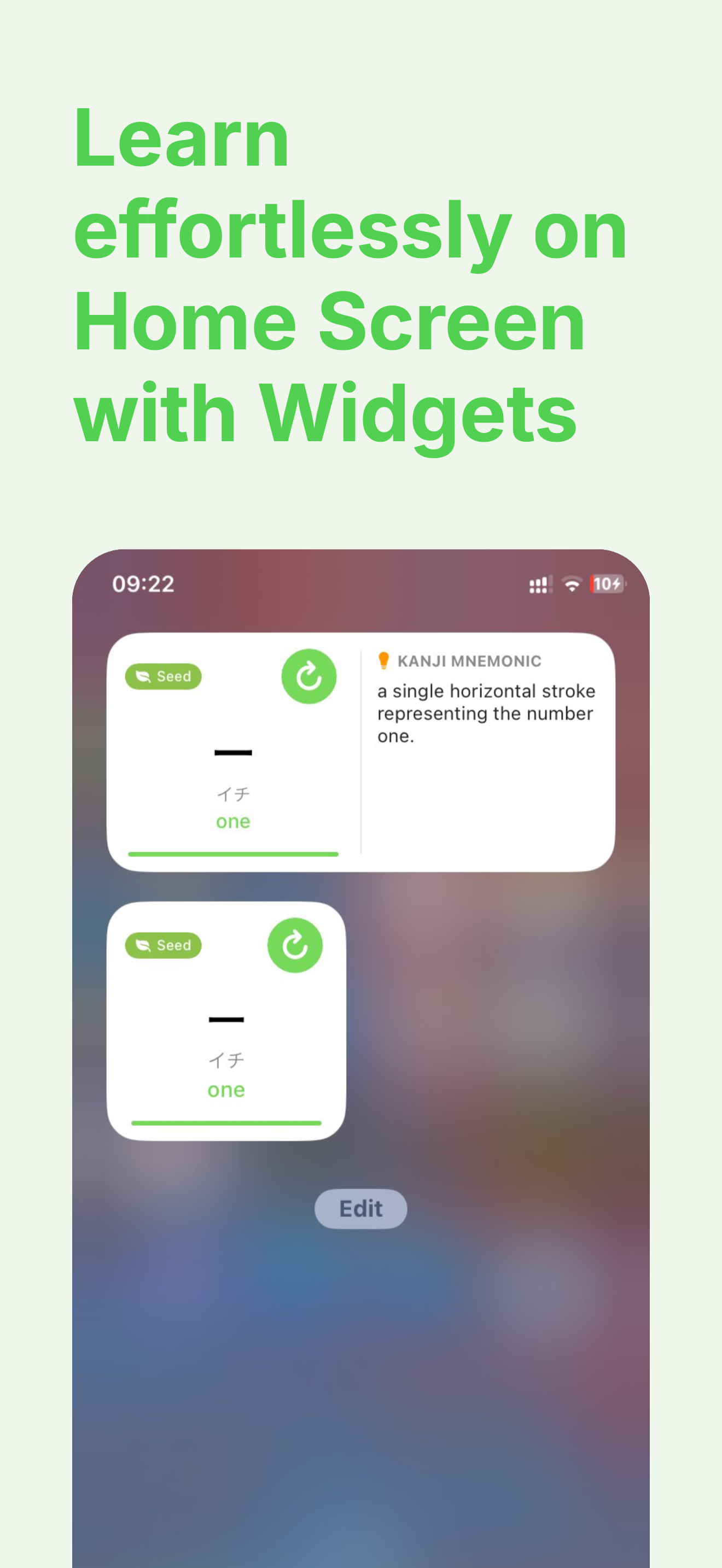
When you fail to recall a kanji in active mode, Kanjijo doesn’t just show the answer - it shows the mnemonic story. The next passive exposure now triggers two retrieval pathways: the visual shape and the mnemonic narrative. Memory traces with two anchors are dramatically more durable than traces with one.
Building Your Personal Dual-Loop Routine
Here’s the minimal effective protocol:
- Set up Loop A: Install the Kanjijo lock screen widget + small home screen widget. Set both to “SRS due” mode so they show at-risk kanji.
- Set up Loop B (active): Add the Kanjijo quiz widget on your home screen above your most-used app. Commit to tapping at least 5 quiz questions per day.
- Anchor session: Once a day, do a focused SRS flashcard review for as long as you have. Even 5 minutes is enough.
- The recall-first rule: Every time the lock screen widget shows you a kanji, force yourself to recall the meaning before reading the answer underneath. This single habit converts Loop A from 100% passive to 50% active.
- Mnemonic recall on failure: When you fail a card, read the mnemonic and re-imagine the visual story. Don’t just “mark it wrong” and move on.
The Compound Effect
This system feels modest day-to-day. You’re not putting in 2-hour sessions. You’re not building Anki decks at midnight. You’re just glancing at your phone and tapping a quiz widget a few times a day.
But the math compounds. Six months of dual-loop reinforcement on 800 kanji equals about:
- ~36,000 passive exposures (Loop A)
- ~900 active recalls (Loop B widget taps)
- ~5,400 active SRS retrievals (anchor sessions)
- ~800 mnemonic reinforcements on missed cards
That’s the kind of deep, multi-modal reinforcement that kanji actually requires to become permanent. And almost none of it felt like work.
What to Do This Week
- Install Kanjijo if you haven’t.
- Add the lock screen widget tonight.
- Add the quiz widget on your home screen tomorrow morning.
- For the next 7 days, every time you see a kanji on the widget, try to recall the meaning before reading it.
- Tap the quiz widget at least 5 times per day.
- Do one 5-minute SRS review session daily.
That’s the entire system. Both loops, running at the same time, on the same SRS data, reinforcing each other. The kanji that have been slipping through your fingers for years are about to start sticking.
Related Reading on Kanjijo
Frequently Asked Questions
Passive exposure means seeing or hearing information without effort. Active recall means producing information from memory before checking. Passive builds recognition; active builds genuine memory. You need both.
Because passive review feels like studying but doesn’t engage retrieval. Without retrieval practice, the forgetting curve wins. The fix is to alternate passive exposure with deliberate active recall - not just one or the other.
Kanjijo’s lock screen and home screen widgets handle passive exposure throughout the day. The quiz widget, SRS flashcards, and lesson tests handle active recall. The same SRS engine drives both, so the kanji you see passively are the same ones you’re tested on actively.
Run Both Loops With Kanjijo
Download Kanjijo and turn on both loops in 5 minutes. The kanji you keep forgetting are about to become unforgettable.
Download Kanjijo Free