You walk into a ramen shop in Shinjuku. The ticket machine has 30 buttons, all in kanji. No pictures. No English. A line of impatient salarymen forms behind you.
This is the moment every Japanese learner either rises to or crumbles under. And the difference isn’t fluency - it’s knowing the 20-ish phrases and 50-ish kanji that cover 95% of all restaurant situations in Japan.
Phase 1: Entering the Restaurant
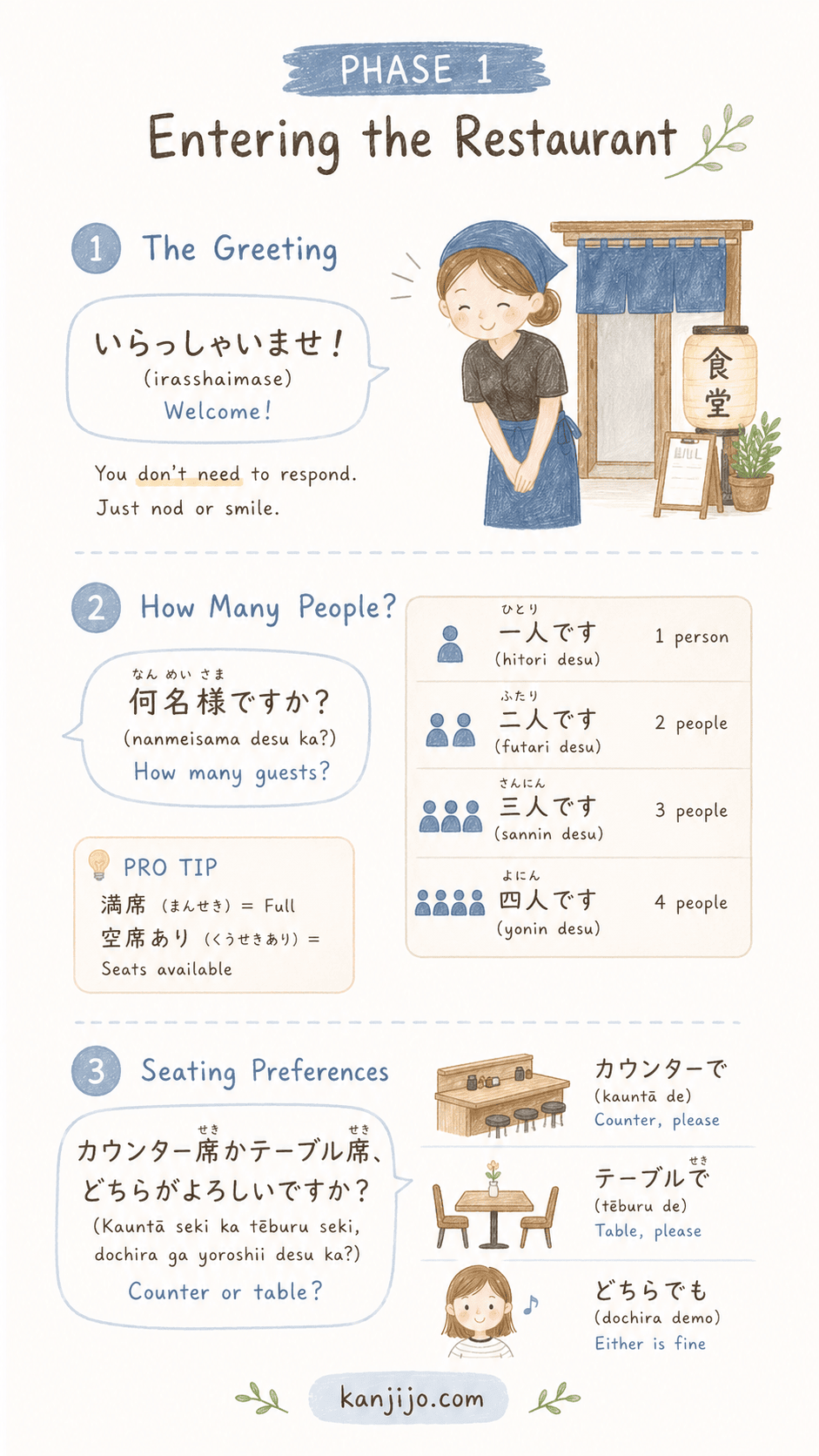
The Greeting
When you walk in, staff will shout いらっしゃいませ! (irasshaimase - welcome!). You don’t need to respond. This is one of the most common tourist mistakes. It’s a greeting, not a question. Just nod or smile.
How Many People?
The host will ask: 何名様ですか?(なんめいさまですか - How many guests?)
Your answer is simple: the number + です.
- 一人です (ひとりです) - Just me / 1 person
- 二人です (ふたりです) - 2 people
- 三人です (さんにんです) - 3 people
- 四人です (よにんです) - 4 people
Pro tip: If you see a sign that says 満席 (まんせき), the restaurant is full. 空席あり (くうせきあり) means seats available.
Seating Preferences
You might be asked: カウンター席かテーブル席、どちらがよろしいですか? (Counter or table?)
- カウンターで (counter, please)
- テーブルで (table, please)
- どちらでも (either is fine)
Phase 2: Reading the Menu
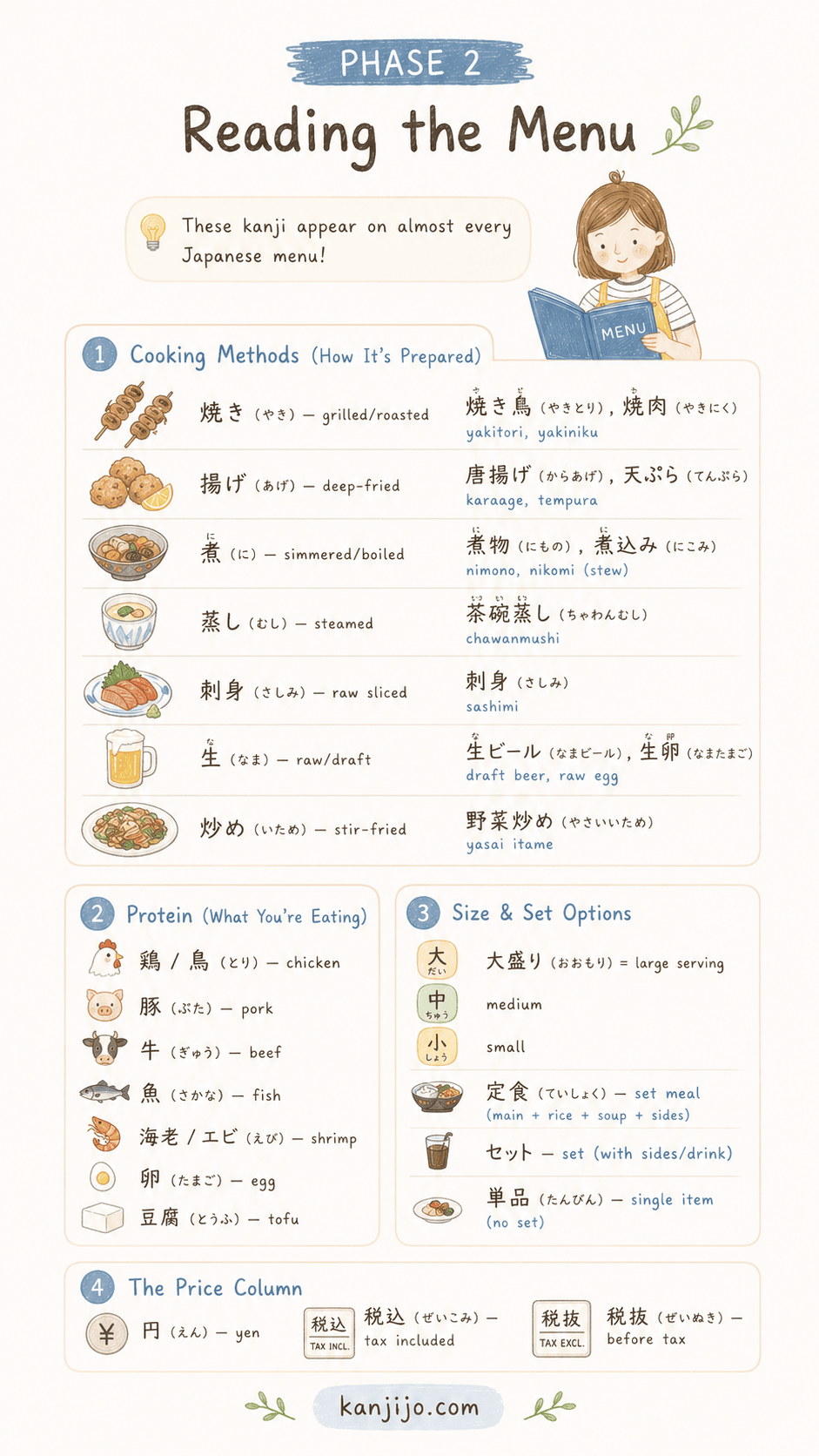
This is where kanji knowledge pays off massively. Here are the kanji that appear on virtually every Japanese menu:
Cooking Methods (How It’s Prepared)
- 焼き (やき) - grilled/roasted: 焼き鳥 (yakitori), 焼肉 (yakiniku)
- 揚げ (あげ) - deep-fried: 唐揚げ (karaage), 天ぷら (tempura)
- 煮 (に) - simmered/boiled: 煮物 (nimono), 煮込み (nikomi = stew)
- 蒸し (むし) - steamed: 茶碗蒸し (chawanmushi)
- 刺身 (さしみ) - raw sliced: the classic sashimi
- 生 (なま) - raw/draft: 生ビール (draft beer), 生卵 (raw egg)
- 炒め (いため) - stir-fried: 野菜炒め (yasai itame)
Protein (What You’re Eating)
- 鶏 / 鳥 (とり) - chicken
- 豚 (ぶた) - pork
- 牛 (ぎゅう) - beef
- 魚 (さかな) - fish
- 海老 / エビ - shrimp
- 卵 (たまご) - egg
- 豆腐 (とうふ) - tofu
Size and Set Options
- 大 (だい) - large: 大盛り (おおもり) = large serving
- 中 (ちゅう) - medium
- 小 (しょう) - small
- 定食 (ていしょく) - set meal (main + rice + soup + sides)
- セット - set (katakana, usually with sides/drink)
- 単品 (たんぴん) - single item (no set)
The Price Column
- 円 (えん) - yen
- 税込 (ぜいこみ) - tax included
- 税抜 (ぜいぬき) - before tax
Phase 3: Ordering
Getting the Waiter’s Attention
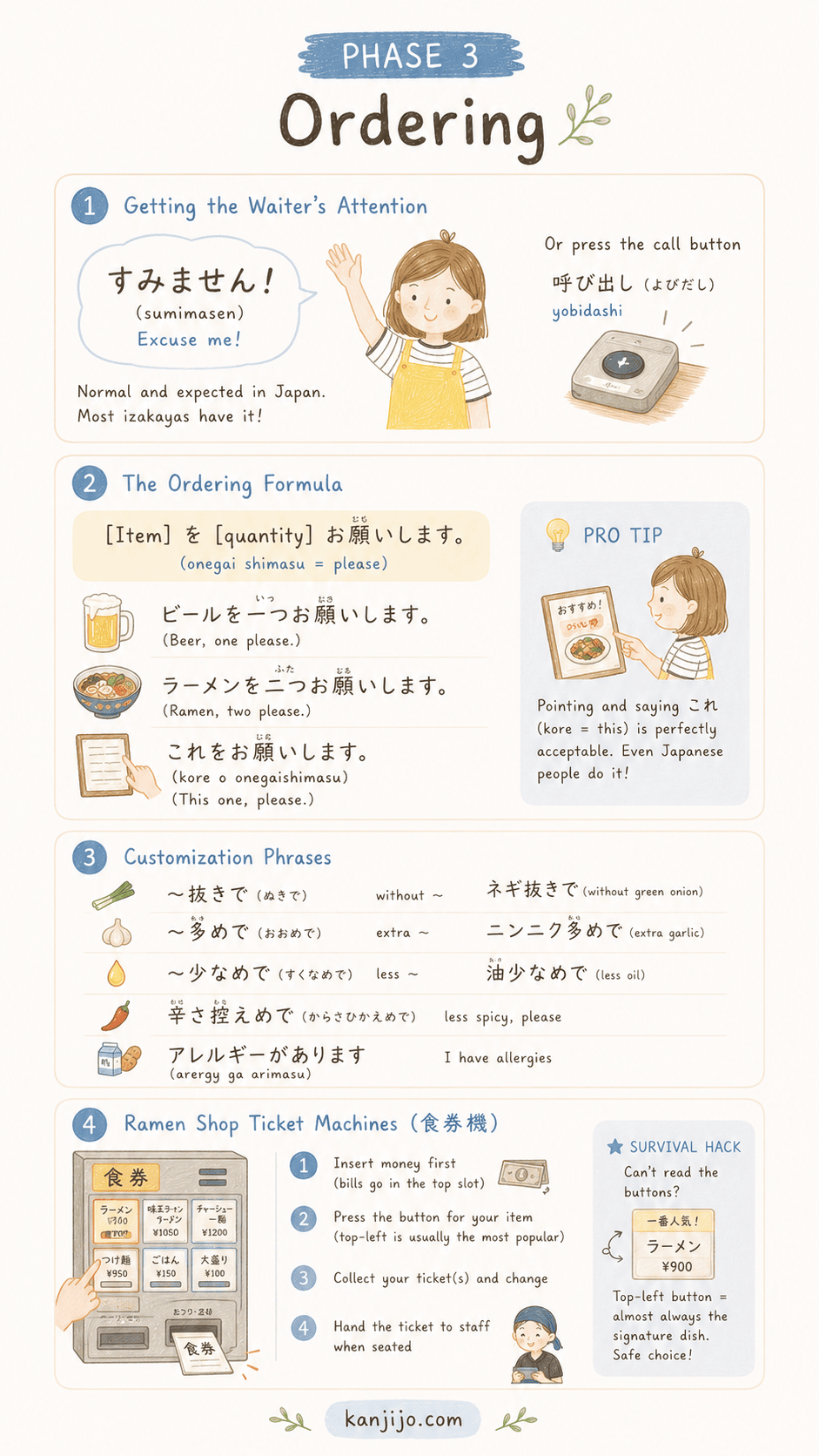
In Japan, you call the waiter: すみません!(sumimasen - excuse me!). This is normal and expected. You can also press the call button (呼び出し / よびだし) if the table has one - most izakayas do.
The Ordering Formula
The basic pattern is dead simple:
[Item] を [quantity] お願いします。
- ビールを一つお願いします。(Beer, one please.)
- ラーメンを二つお願いします。(Ramen, two please.)
- これをお願いします。(This one, please.) [pointing at menu]
Pro tip: Pointing at the menu and saying これ (kore = this) is perfectly acceptable. Even Japanese people do it. No shame in pointing.
Customization Phrases
- 〜抜きで (ぬきで) - without ~: ネギ抜きで (without green onion)
- 〜多めで (おおめで) - extra ~: ニンニク多めで (extra garlic)
- 〜少なめで (すくなめで) - less ~: 油少なめで (less oil)
- 辛さ控えめで (からさひかえめで) - less spicy, please
- アレルギーがあります (I have allergies)
Ramen Shop Ticket Machines (食券機)
Many ramen and gyudon shops use ticket machines (食券機 / しょっけんき) instead of waiters. The process:
- Insert money first (bills go in the top slot)
- Press the button for your item (top-left is usually the most popular)
- Collect your ticket(s) and change
- Hand the ticket to staff when seated
Survival hack: If you can’t read any buttons, the top-left button is almost always the signature dish. It’s the safe choice.
Phase 4: During the Meal
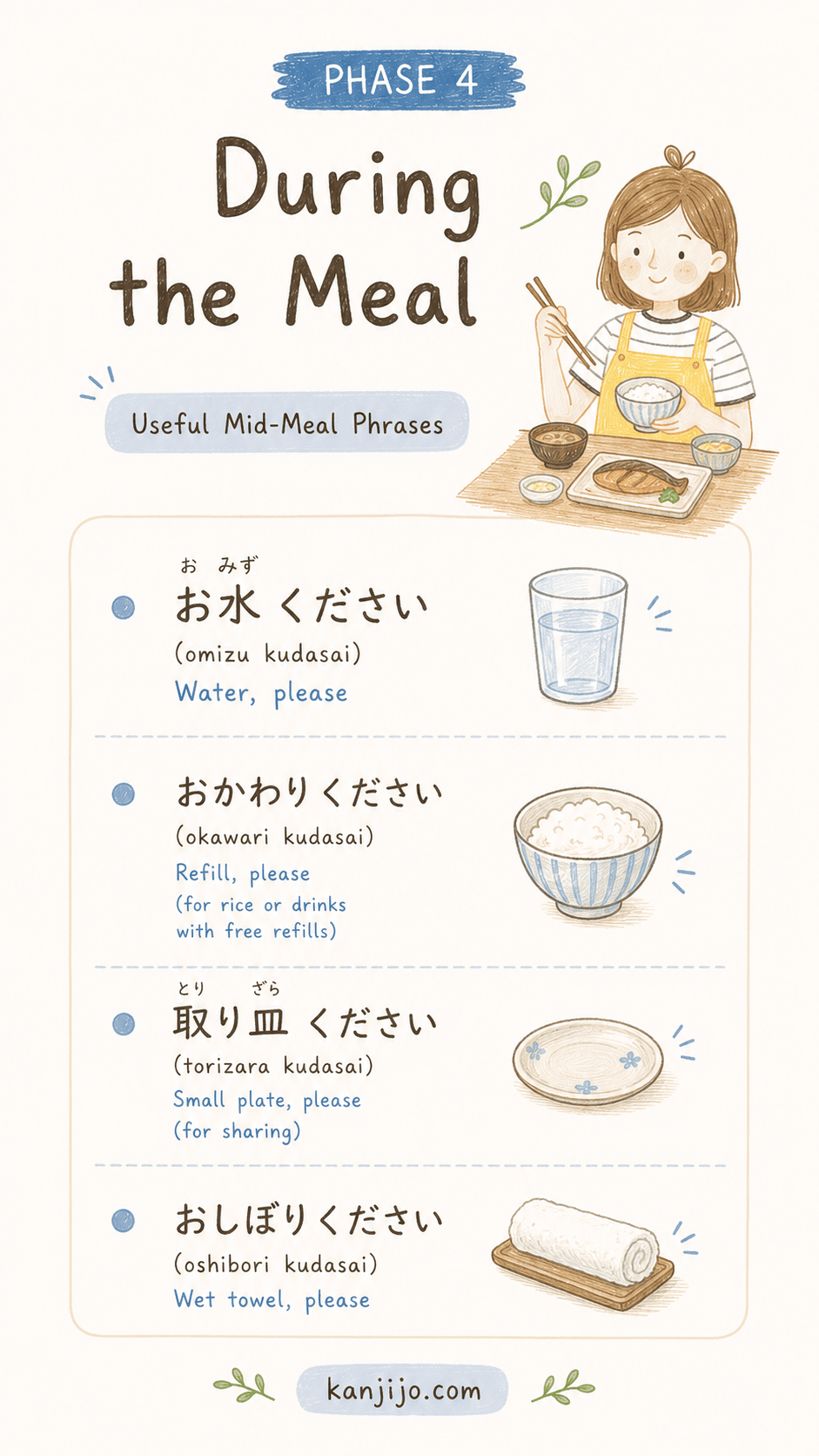
Useful Mid-Meal Phrases
- お水ください (おみずください) - Water, please
- おかわりください - Refill, please (for rice or drinks with free refills)
- 取り皿ください (とりざらください) - Small plate, please (for sharing)
- おしぼりください - Wet towel, please
Phase 5: Paying and Leaving
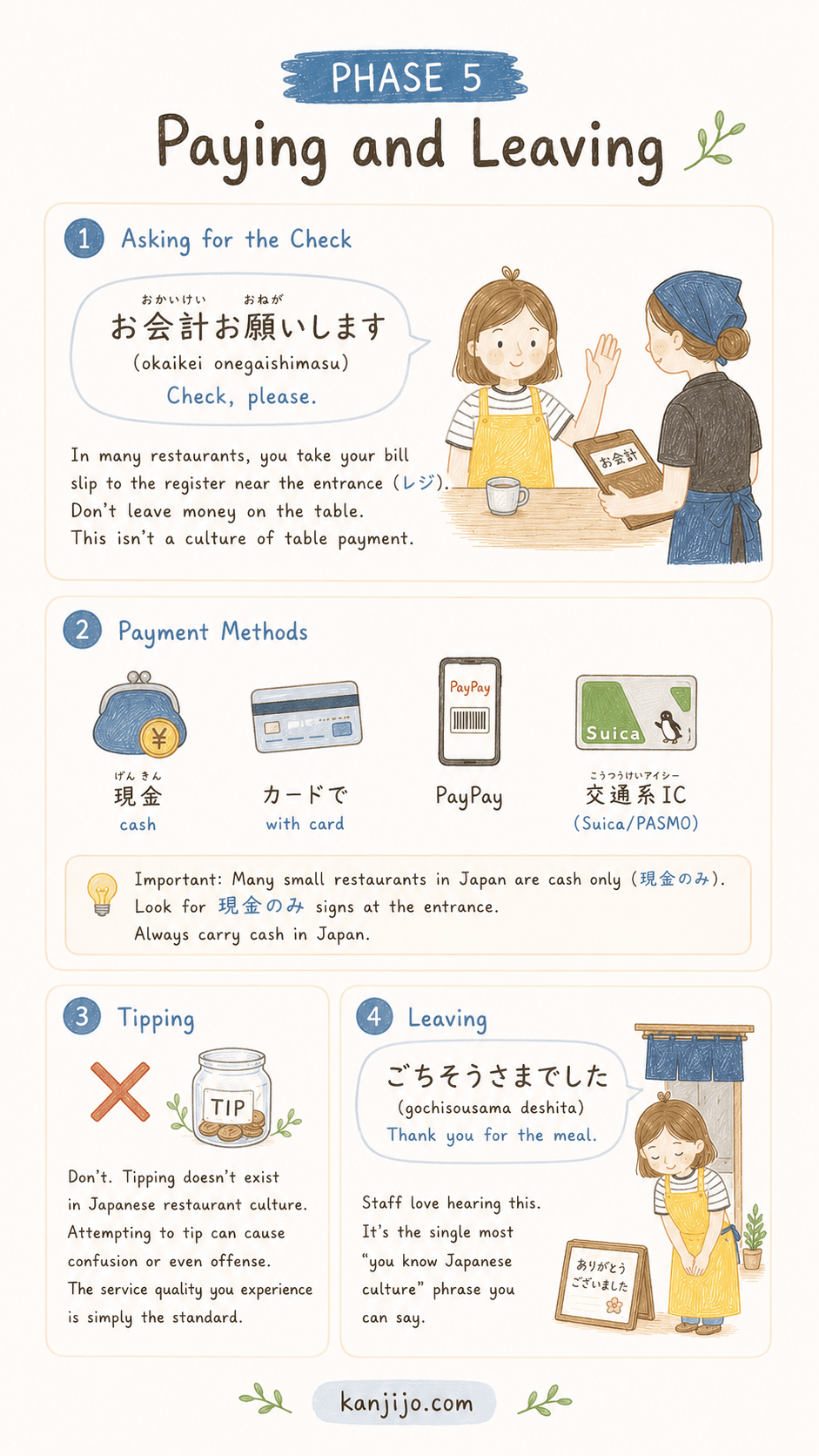
Asking for the Check
お会計お願いします (おかいけいおねがいします) - Check, please.
In many restaurants, you take your bill slip to the register near the entrance (レジ). Don’t leave money on the table - this isn’t a culture of table payment in most places.
Payment Methods
- 現金 (げんきん) - cash
- カードで (with card)
- PayPay / 交通系IC (Suica/PASMO)
Important: Many small restaurants in Japan are cash only (現金のみ). Look for 現金のみ signs at the entrance. Always carry cash in Japan.
Tipping
Don’t. Tipping doesn’t exist in Japanese restaurant culture. Attempting to tip can cause confusion or even offense. The service quality you experience is simply the standard.
Leaving
As you leave, say: ごちそうさまでした (gochisousama deshita - thank you for the meal). Staff love hearing this. It’s the single most “you know Japanese culture” phrase you can say.
The 15 Kanji That Unlock Every Menu
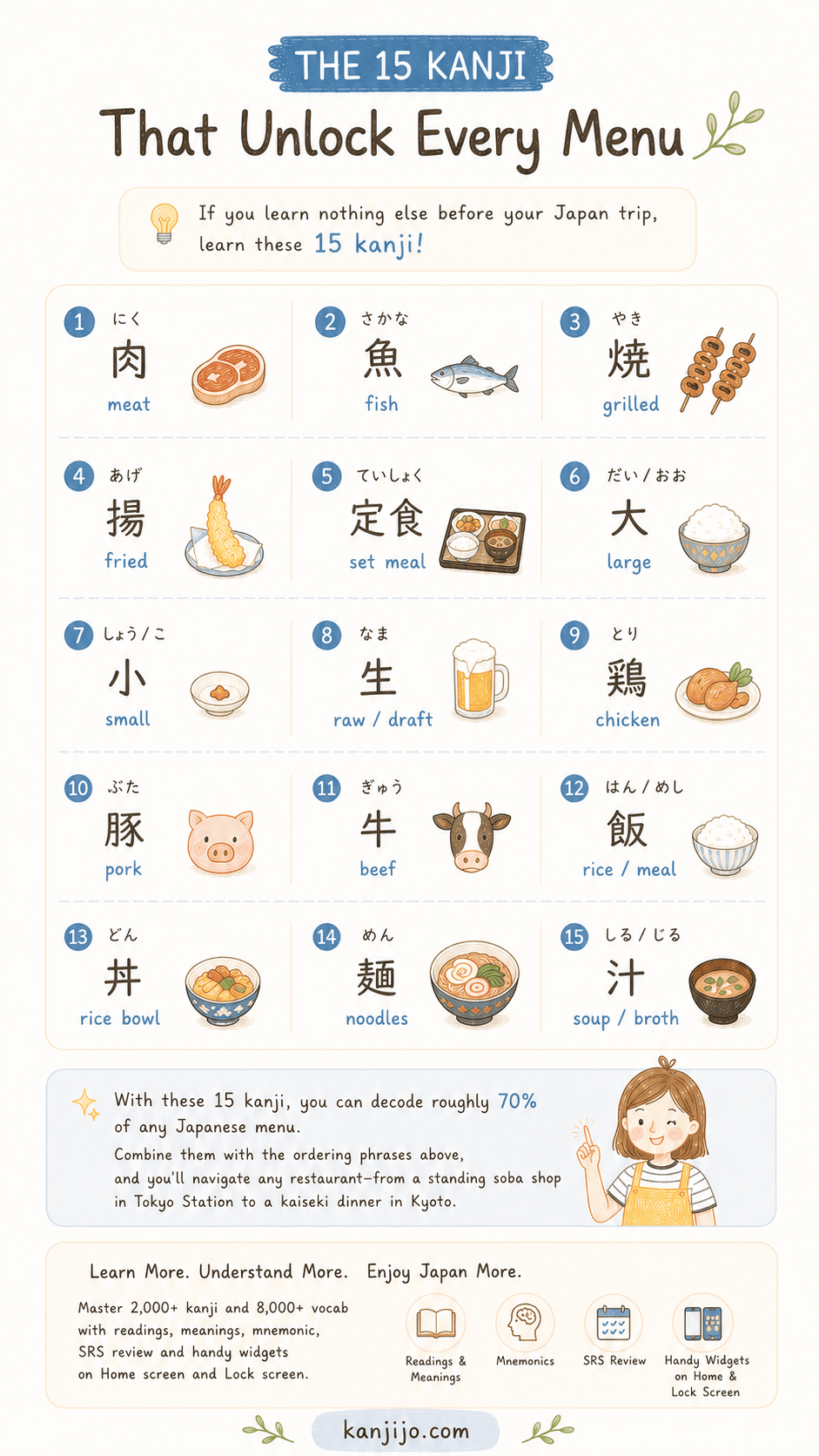
If you learn nothing else before your Japan trip, learn these 15 kanji. They appear on every single menu in the country:
- 肉 (にく) - meat
- 魚 (さかな) - fish
- 焼 (やき) - grilled
- 揚 (あげ) - fried
- 定食 (ていしょく) - set meal
- 大 (だい/おお) - large
- 小 (しょう/こ) - small
- 生 (なま) - raw/draft
- 鶏 (とり) - chicken
- 豚 (ぶた) - pork
- 牛 (ぎゅう) - beef
- 飯 (はん/めし) - rice/meal
- 丼 (どん) - rice bowl
- 麺 (めん) - noodles
- 汁 (しる/じる) - soup/broth
With these 15 kanji, you can decode roughly 70% of any Japanese menu. Combine them with the ordering phrases above, and you’ll navigate any restaurant from a standing soba shop in Tokyo Station to a kaiseki dinner in Kyoto.
Master 2,500+ kanji with readings, meanings, and real-world context - free on iOS.