Here’s a secret most textbooks bury in the appendix: kanji aren’t random. Almost every kanji is built from smaller, meaningful components called radicals (部首 / ぶしゅ). Learn the radicals, and suddenly kanji go from “impossible squiggles” to “oh, I can see what that means.”
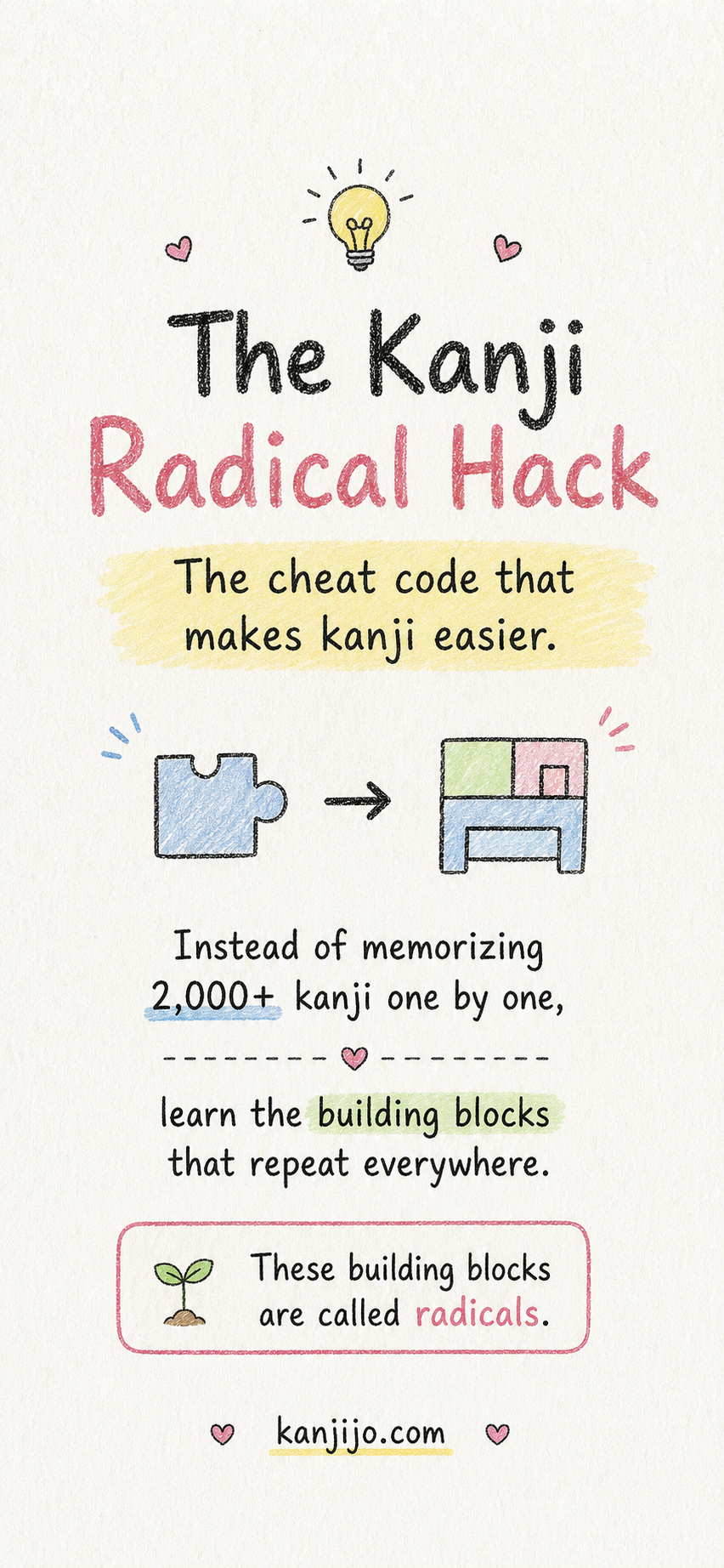
The math: 214 traditional radicals combine to form 2,136+ Jōyō kanji. Learn 40 radicals, and you can decode the meaning category of 60–70% of common kanji.
How Radicals Work: Semantic vs. Phonetic
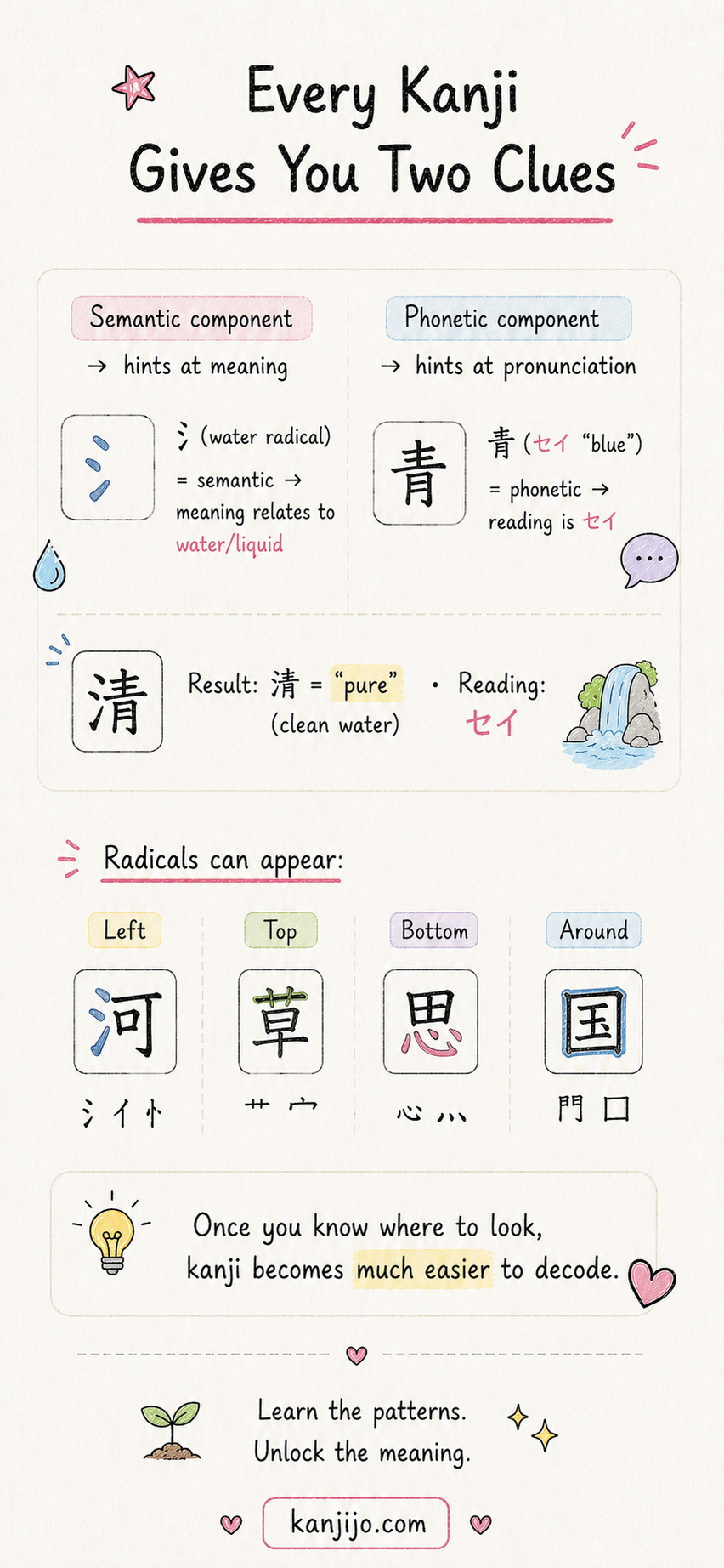
Most kanji have two types of components:
- Semantic component (意符 / いふ) - Tells you the meaning category. Usually the radical itself.
- Phonetic component (音符 / おんぷ) - Hints at the on’yomi reading. Less reliable but still useful.
Example: 清 (きよい / セイ “pure”)
氵 (water radical) = semantic → meaning relates to water/liquid
青 (セイ “blue”) = phonetic → reading is セイ
Result: 清 = “pure” (clean water) · Reading: セイ
The 40 Most Useful Radicals
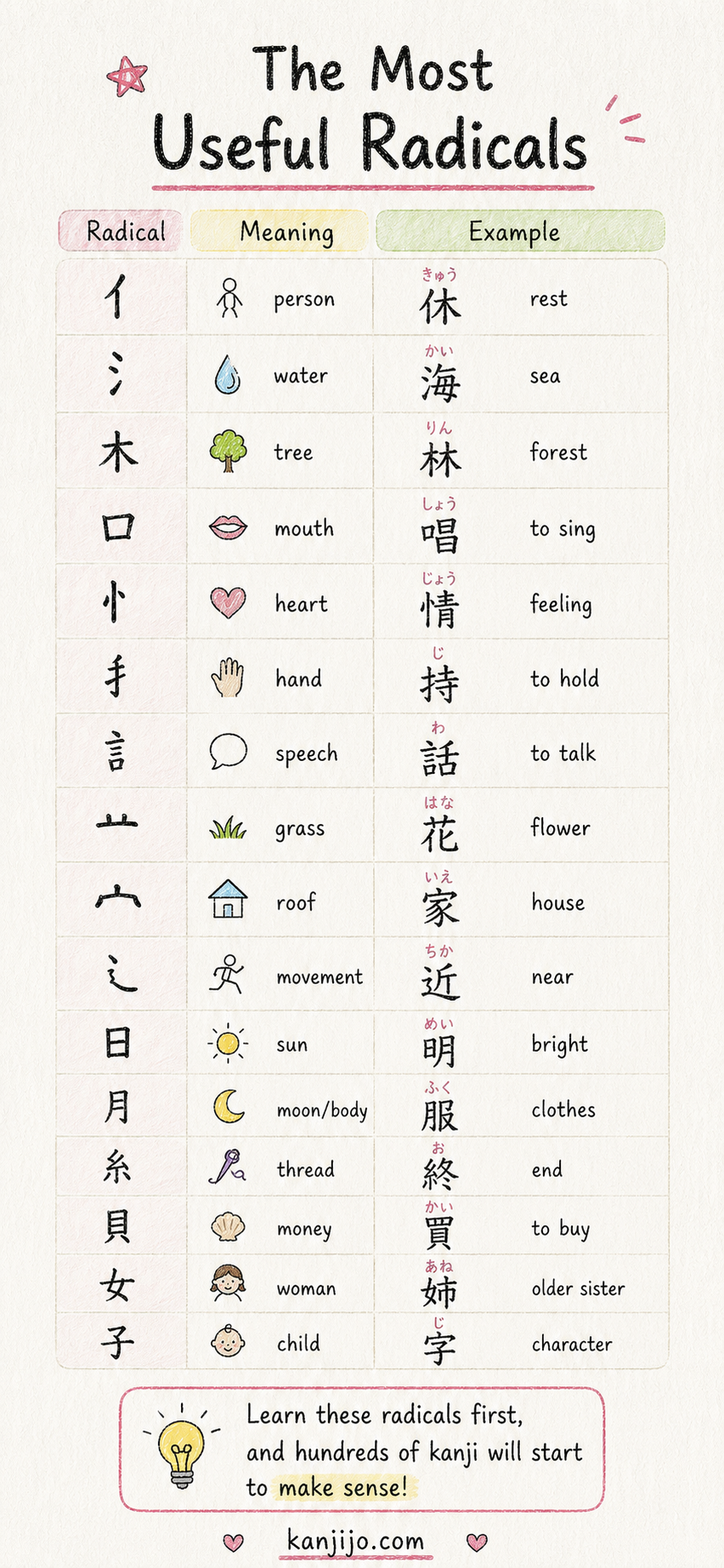
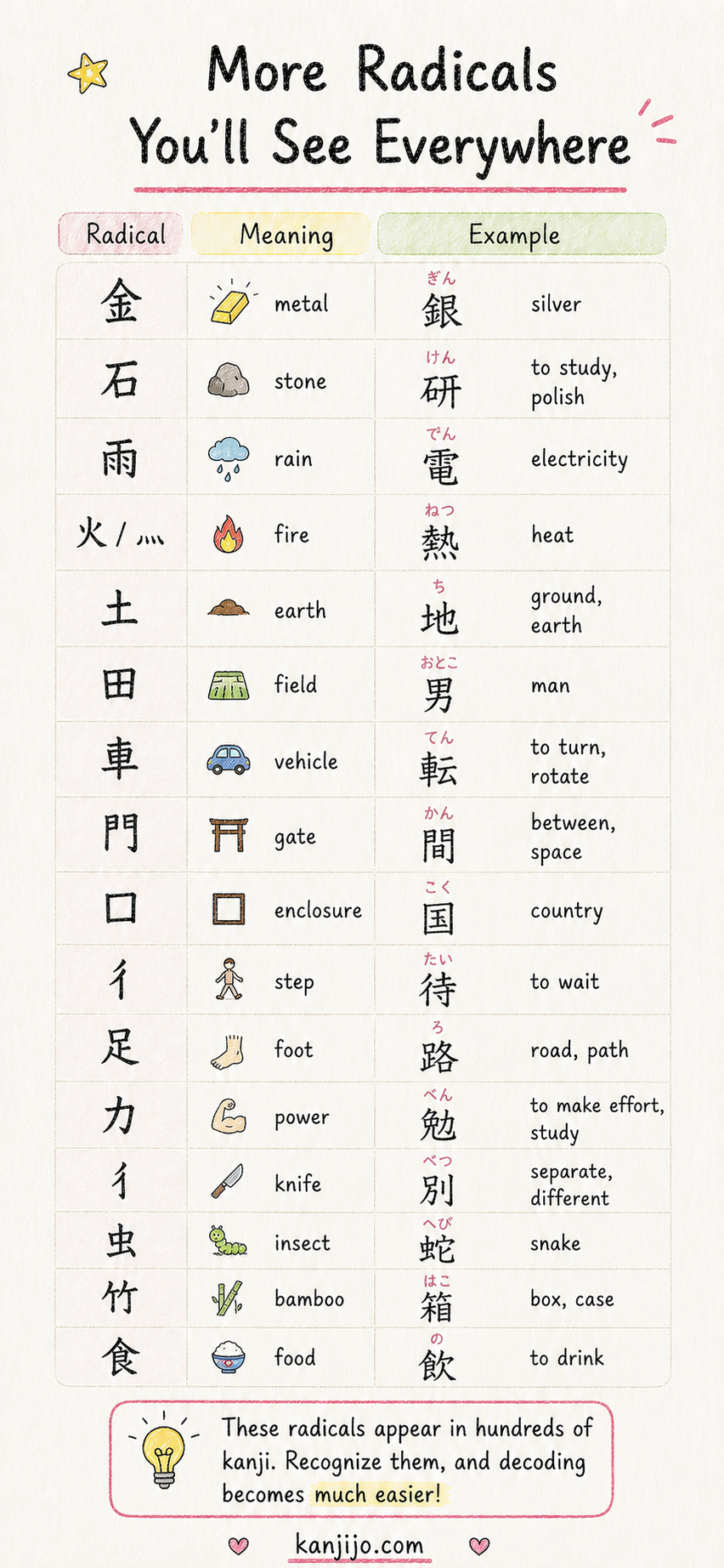
Master these radicals and you’ll have x-ray vision for kanji. They’re grouped by the meaning patterns they create.
Nature & Elements
| Radical | Name | Meaning | Kanji Examples |
|---|---|---|---|
| 氵 | さんずい | Water | 海 (うみ sea), 池 (いけ pond), 湖 (みずうみ lake), 河 (かわ river), 泳 (およぐ swim) |
| 火 / 灬 | ひ / れっか | Fire | 焼 (やく burn), 煙 (けむり smoke), 照 (てらす shine), 熱 (ねつ heat), 蒸 (むす steam) |
| 木 | き / きへん | Tree, Wood | 林 (はやし grove), 森 (もり forest), 桜 (さくら cherry), 板 (いた board), 机 (つくえ desk) |
| 土 | つち / つちへん | Earth, Ground | 地 (ち ground), 場 (ば place), 堂 (どう hall), 塩 (しお salt), 城 (しろ castle) |
| 山 | やま / やまへん | Mountain | 峰 (みね peak), 島 (しま island), 岩 (いわ rock), 崎 (さき cape), 崩 (くずれる collapse) |
| 雨 | あめかんむり | Rain, Weather | 雪 (ゆき snow), 雲 (くも cloud), 雷 (かみなり thunder), 電 (でん electricity), 霧 (きり fog) |
| 日 | ひ / にちへん | Sun, Day | 明 (あかるい bright), 時 (とき time), 昼 (ひる noon), 暑 (あつい hot), 曜 (よう weekday) |
| 月 | つき / つきへん | Moon, Month, Flesh | 朝 (あさ morning), 期 (き period) · As flesh: 肉 (にく meat), 腕 (うで arm), 脳 (のう brain) |
Human Body & Actions
| Radical | Name | Meaning | Kanji Examples |
|---|---|---|---|
| 人 / 亻 | ひと / にんべん | Person | 休 (やすむ rest), 体 (からだ body), 住 (すむ live), 作 (つくる make), 仕 (つかえる serve) |
| 口 | くち / くちへん | Mouth | 食 (たべる eat), 味 (あじ taste), 呼 (よぶ call), 吸 (すう inhale), 唱 (となえる chant) |
| 手 / 扌 | て / てへん | Hand | 持 (もつ hold), 打 (うつ hit), 押 (おす push), 拾 (ひろう pick up), 振 (ふる swing) |
| 足 / ⻊ | あし / あしへん | Foot, Leg | 走 (はしる run), 跳 (とぶ jump), 路 (ろ road), 踊 (おどる dance), 距 (きょ distance) |
| 目 | め / めへん | Eye | 見 (みる see), 眠 (ねむる sleep), 瞳 (ひとみ pupil), 睡 (すい sleep), 眼 (がん eye) |
| 耳 | みみ / みみへん | Ear | 聞 (きく hear), 聴 (きく listen), 職 (しょく job), 聖 (せい holy) |
| 心 / 忄 | こころ / りっしんべん | Heart, Emotion | 思 (おもう think), 悲 (かなしい sad), 情 (じょう feeling), 慣 (なれる accustom), 恋 (こい love) |
| 言 / 訁 | ことば / ごんべん | Speech, Words | 話 (はなす talk), 読 (よむ read), 語 (ご language), 説 (せつ explain), 記 (き record) |
Movement & Position
| Radical | Name | Meaning | Kanji Examples |
|---|---|---|---|
| 辶 / ⻌ | しんにょう | Road, Walk | 道 (みち road), 通 (とおる pass), 近 (ちかい near), 進 (すすむ advance), 送 (おくる send) |
| 門 | もん / もんがまえ | Gate | 開 (あける open), 閉 (しめる close), 間 (あいだ interval), 関 (かん relation), 聞 (きく hear) |
| 車 | くるま / くるまへん | Car, Wheel | 転 (てん turn), 軽 (かるい light), 輪 (わ ring), 載 (のせる load), 輸 (ゆ transport) |
| ⻖(left) | こざとへん | Hill, Mound | 院 (いん institution), 階 (かい floor), 防 (ぼう prevent), 限 (げん limit), 陸 (りく land) |
| ⻏(right) | おおざと | City, Village | 都 (と capital), 部 (ぶ section), 郵 (ゆう mail), 郊 (こう suburbs), 邦 (ほう nation) |
Materials & Objects
| Radical | Name | Meaning | Kanji Examples |
|---|---|---|---|
| 金 / 釒 | かね / かねへん | Metal, Gold | 銀 (ぎん silver), 鉄 (てつ iron), 鏡 (かがみ mirror), 針 (はり needle), 錠 (じょう lock) |
| 糸 / 糹 | いと / いとへん | Thread, Silk | 紙 (かみ paper), 結 (むすぶ tie), 線 (せん line), 織 (おる weave), 絵 (え painting) |
| 石 | いし / いしへん | Stone | 岩 (いわ rock), 砂 (すな sand), 研 (けん sharpen), 確 (たしか certain), 破 (やぶる break) |
| 食 / 飠 | しょく / しょくへん | Food, Eat | 飲 (のむ drink), 飯 (めし meal), 飼 (かう raise), 餓 (が hunger), 館 (かん building) |
| 衣 / 衤 | ころも / ころもへん | Clothing | 被 (かぶる wear), 裸 (はだか naked), 補 (おぎなう supplement), 複 (ふく complex), 袋 (ふくろ bag) |
Abstract & Conceptual
| Radical | Name | Meaning | Kanji Examples |
|---|---|---|---|
| 女 | おんな / おんなへん | Woman | 好 (すき like), 姉 (あね older sis), 妹 (いもうと younger sis), 嫁 (よめ bride), 婚 (こん marriage) |
| 子 | こ / こへん | Child | 学 (まなぶ study), 字 (じ character), 孫 (まご grandchild), 存 (そん exist) |
| 力 | ちから / ちからへん | Power | 動 (うごく move), 勉 (べん effort), 助 (たすける help), 努 (ど endeavor), 勝 (かつ win) |
| 刀 / 刂 | かたな / りっとう | Sword, Cut | 切 (きる cut), 分 (わける divide), 刺 (さす stab), 判 (はん judge), 割 (わる split) |
| 示 / 礻 | しめす / しめすへん | Spirit, Ritual | 神 (かみ god), 社 (しゃ shrine), 祝 (いわう celebrate), 祈 (いのる pray), 禅 (ぜん zen) |
| 宀 | うかんむり | Roof, House | 家 (いえ house), 室 (しつ room), 安 (やすい cheap/safe), 宝 (たから treasure), 客 (きゃく guest) |
| 广 | まだれ | Cliff, Building | 店 (みせ shop), 広 (ひろい wide), 度 (ど degree), 庭 (にわ garden), 病 (びょう illness) |
| 竹 / ⺮ | たけ / たけかんむり | Bamboo | 笑 (わらう laugh), 箱 (はこ box), 筆 (ふで brush), 算 (さん calculate), 簡 (かん simple) |
| 艹 | くさかんむり | Grass, Plant | 花 (はな flower), 茶 (ちゃ tea), 薬 (くすり medicine), 葉 (は leaf), 苦 (くるしい bitter) |
| 疒 | やまいだれ | Sickness | 病 (びょう illness), 痛 (いたい pain), 症 (しょう symptom), 療 (りょう treat), 癌 (がん cancer) |
Decoding in Action: 5 Real Examples
Let’s apply the radical hack to kanji you’ve never seen before:
Example 1: 溶 (とける / ヨウ “melt, dissolve”)
氵 (water) + 容 (ヨウ, contain) = something water-related that “contains” → dissolve
Semantic: water · Phonetic: ヨウ
Example 2: 鋼 (はがね / コウ “steel”)
釒 (metal) + 岡 (コウ, ridge) = a strong metal → steel
Semantic: metal · Phonetic: コウ
Example 3: 腸 (チョウ “intestines”)
月 (flesh/body) + 昜 (チョウ/ヨウ) = a body part → intestines
Semantic: body part · Phonetic: チョウ
Example 4: 詐 (サ “fraud”)
言 (speech/words) + 乍 (サ) = something speech-related → deceitful words → fraud
Semantic: words · Phonetic: サ
Example 5: 樹 (き / ジュ “tree”)
木 (tree/wood) + ... = definitely tree-related → a tree
Semantic: tree
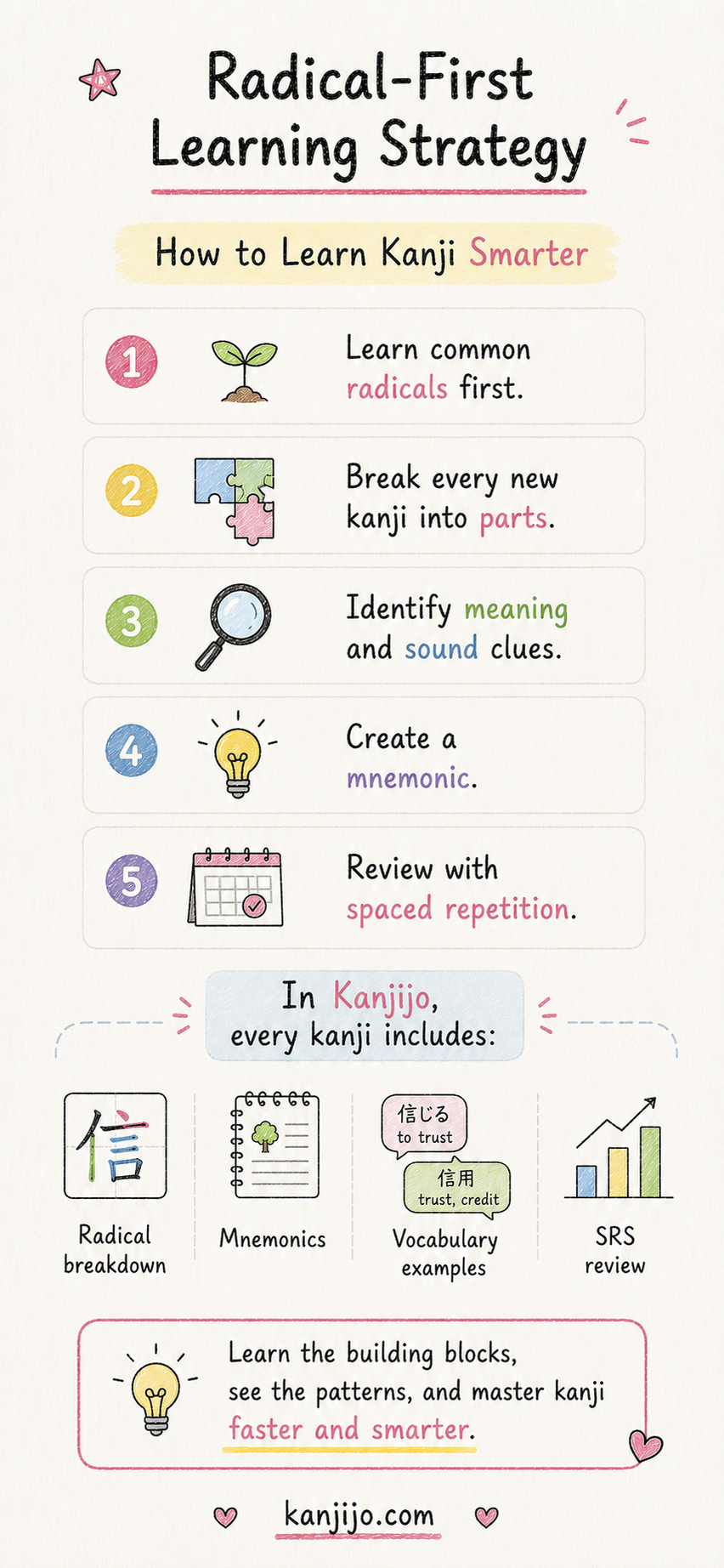
The “Radical First” Learning Strategy
Instead of jumping straight into kanji, spend your first 1–2 weeks learning radicals. Here’s the method:
- Week 1: Learn the 40 radicals in the tables above. Use flashcards - radical on front, meaning on back.
- Week 2: Practice spotting radicals in real kanji. Pick 10 kanji per day and identify their components.
- Week 3+: When you encounter a new kanji, always ask: “What radical do I see? What meaning category does that suggest?”
Pro tip: When looking at an unknown kanji, find the radical first (usually on the left side or top). That tells you the topic. The rest of the character often hints at the pronunciation.
Practice Exercises
Guess the meaning category of these kanji based on their radicals:
| Kanji | Radical You See | Predicted Category | Actual Meaning |
|---|---|---|---|
| 泳 | 氵 (water) | Water-related | およぐ “to swim” |
| 銅 | 釒 (metal) | Metal-related | どう “copper” |
| 悩 | 忄 (heart) | Emotion-related | なやむ “to worry” |
| 枝 | 木 (tree) | Wood/tree-related | えだ “branch” |
| 訪 | 言 (speech) | Communication | おとずれる “to visit” |
| 肺 | 月 (flesh) | Body part | はい “lungs” |
| 畑 | 火 + 田 | Fire + field | はたけ “farm field” |
| 祭 | 示 (ritual) | Ceremony | まつり “festival” |
Common Radical Positions
Radicals appear in predictable positions within kanji. Knowing where to look speeds up identification:
Left side (へん): 氵 亻 扌 言 糸 金 - Most common position
Top (かんむり): 艹 宀 雨 竹 - Sits on top like a crown
Bottom (あし): 心 灬 - Supports from below
Enclosure (かまえ): 門 囗 - Surrounds the character
Left-bottom (にょう): 辶 - Wraps from left to bottom
Phonetic Components: The Reading Shortcut
While semantic radicals hint at meaning, phonetic components hint at on’yomi readings. Example family:
| Phonetic | Reading | Kanji with this phonetic |
|---|---|---|
| 青 (セイ) | セイ | 清 (セイ pure), 晴 (セイ clear), 精 (セイ spirit), 静 (セイ quiet), 請 (セイ request) |
| 寺 (ジ) | ジ | 時 (ジ time), 持 (ジ hold), 詩 (シ poem), 特 (トク special), 待 (タイ wait) |
| 工 (コウ) | コウ | 空 (クウ sky), 紅 (コウ crimson), 功 (コウ merit), 攻 (コウ attack) |
| 包 (ホウ) | ホウ | 抱 (ホウ embrace), 泡 (ホウ bubble), 砲 (ホウ cannon), 飽 (ホウ satiate) |
Phonetic components are less reliable than semantic ones (roughly 40–60% accuracy), but they still give you a useful guess when you encounter an unknown kanji.
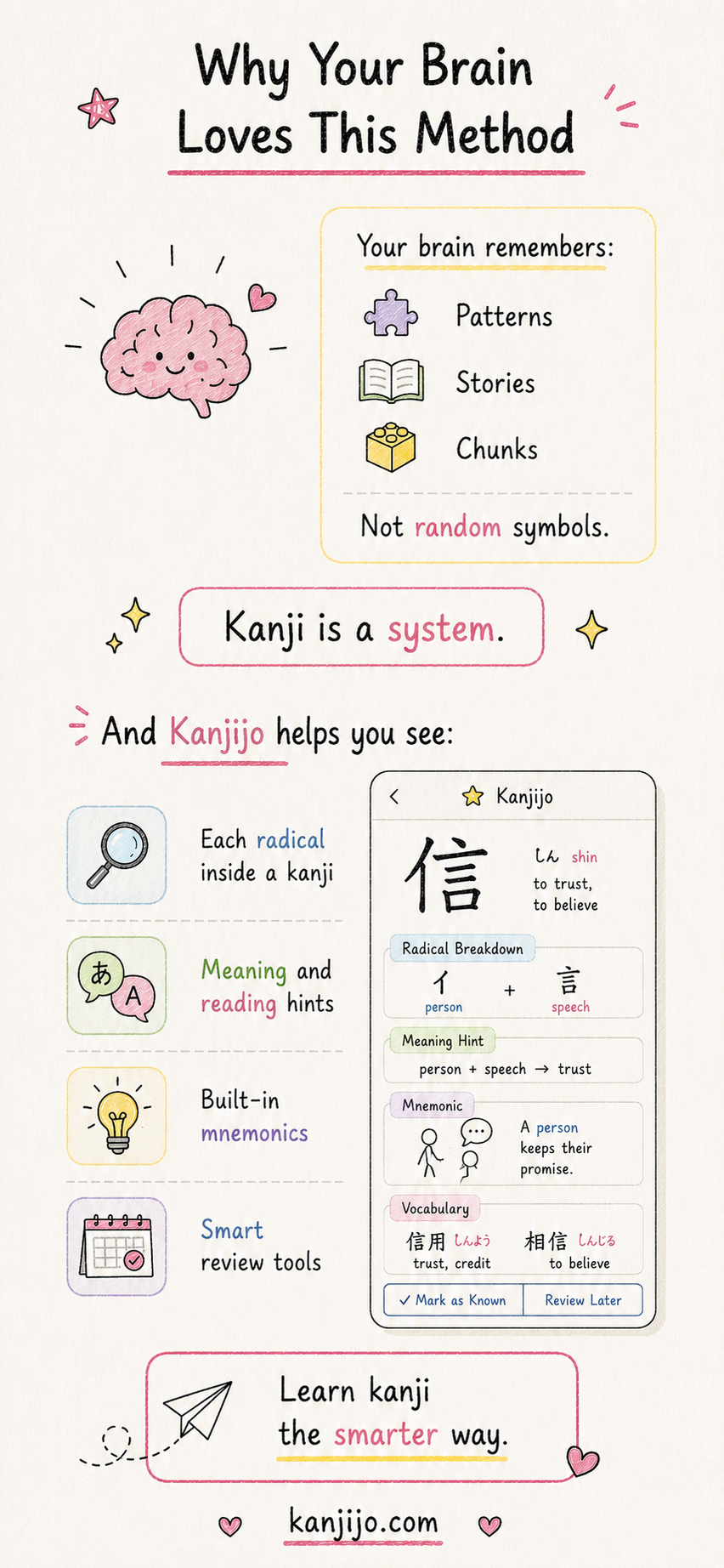
Why This Works for Your Brain
Our brains are pattern-recognition machines. When you try to memorize 教 as a single unit of 11 strokes, your brain sees chaos. But when you break it into 孝 (filial piety) + 攵 (strike/action) = “teaching” (passing down values through action), your brain has a story to hold onto.
Once you know the common radicals, every new kanji becomes a puzzle with familiar pieces, not a brand-new shape.
Related Reading on Kanjijo
Kanji Radicals: The Complete Building Blocks Guide Guess Kanji Meaning from 部首 (Radicals) Kanji Etymology: Where Characters Come From Top 100 Most Common KanjiFrequently Asked Questions
The traditional Kangxi system has 214 radicals, but modern Japanese dictionaries often group them into around 200. For practical kanji learning, knowing 40–50 of the most common radicals will help you decode a huge majority of everyday kanji.
Yes, for many kanji the semantic radical directly hints at the meaning category. For example, 氵(water radical) appears in 海 (うみ sea), 池 (いけ pond), 湖 (みずうみ lake), and 河 (かわ river). Accuracy improves with practice and works for roughly 60–70% of common kanji.
Learning the most common 40–50 radicals first gives you a huge head start. Each new kanji becomes a combination of familiar parts rather than a random collection of strokes, dramatically reducing memorization effort.
Decode Kanji Faster with Kanjijo
Kanjijo turns this method into a daily system with radical breakdowns, mnemonic support, vocabulary context, OCR capture, widgets, and calm SRS review so the pattern-recognition skill actually sticks.
Download Kanjijo Free