Almost every Japanese learning guide assumes you have a free hour every day to sit down with a textbook, a coffee, and quiet music. That guide is not for you.
This one is.
This is for the new parent whose “free time” is the 8 minutes between their kid falling asleep and themselves passing out. The startup founder who sleeps 5 hours and works 14. The medical resident on a 30-hour shift. The full-time student who already has 40 hours of coursework. The person who has wanted to learn Japanese for years and keeps quitting because the apps demand more time than exists in their day.
You don’t need to find time. You need a system that fits inside the time you already use looking at your phone.
The Lie of “Just Make Time”
Every productivity influencer says the same thing: “You always have time for what matters. Just wake up earlier. Just skip Netflix. Just commit.”
This advice is condescending and wrong. People with demanding jobs and small children are not failing because of a lack of discipline. They are at a structural ceiling on free attention. Adding a 30-minute Japanese session to that life means subtracting it from sleep, family, or sanity. None of those are good trades.
The right question isn’t “How do I make time for Japanese?” It’s “How do I learn Japanese without making time for it?”
The Math of Micro-Sessions
Most learners think they need 30+ minute sessions to learn anything meaningful. The science says the opposite. Distributed practice - many short, spaced sessions - beats massed practice for long-term retention by 2–3x.
Here’s the math of a “zero free time” day:
| Moment | Duration | What you do | Cards reviewed |
|---|---|---|---|
| Phone unlock × 80 | 2 sec each | Glance at lock screen kanji | 80 passive impressions |
| Waiting for coffee | 90 sec | Quick SRS review | 10–15 cards |
| Quiz widget taps | 10 sec each × 15 | Tap an answer in the widget | 15 active recalls |
| Standing in line | 60 sec | One Kanjijo lesson card | 1–2 new items |
| OCR a sign / receipt / message | 30 sec | Scan and tap to add | 3–5 favorites added |
| Bedtime widget glance | 5 sec | Final pre-sleep impression | 1 strong consolidation |
| Total | ~5 min active | + ambient passive | ~25 effective reviews |
Five minutes of structured time produces 25+ meaningful reviews. That’s about what a 30-minute focused study session produces - but it’s spread throughout the day, where the science actually wants it.
The Zero-Time System (5 Components)
1. The Lock Screen Layer (zero added time)
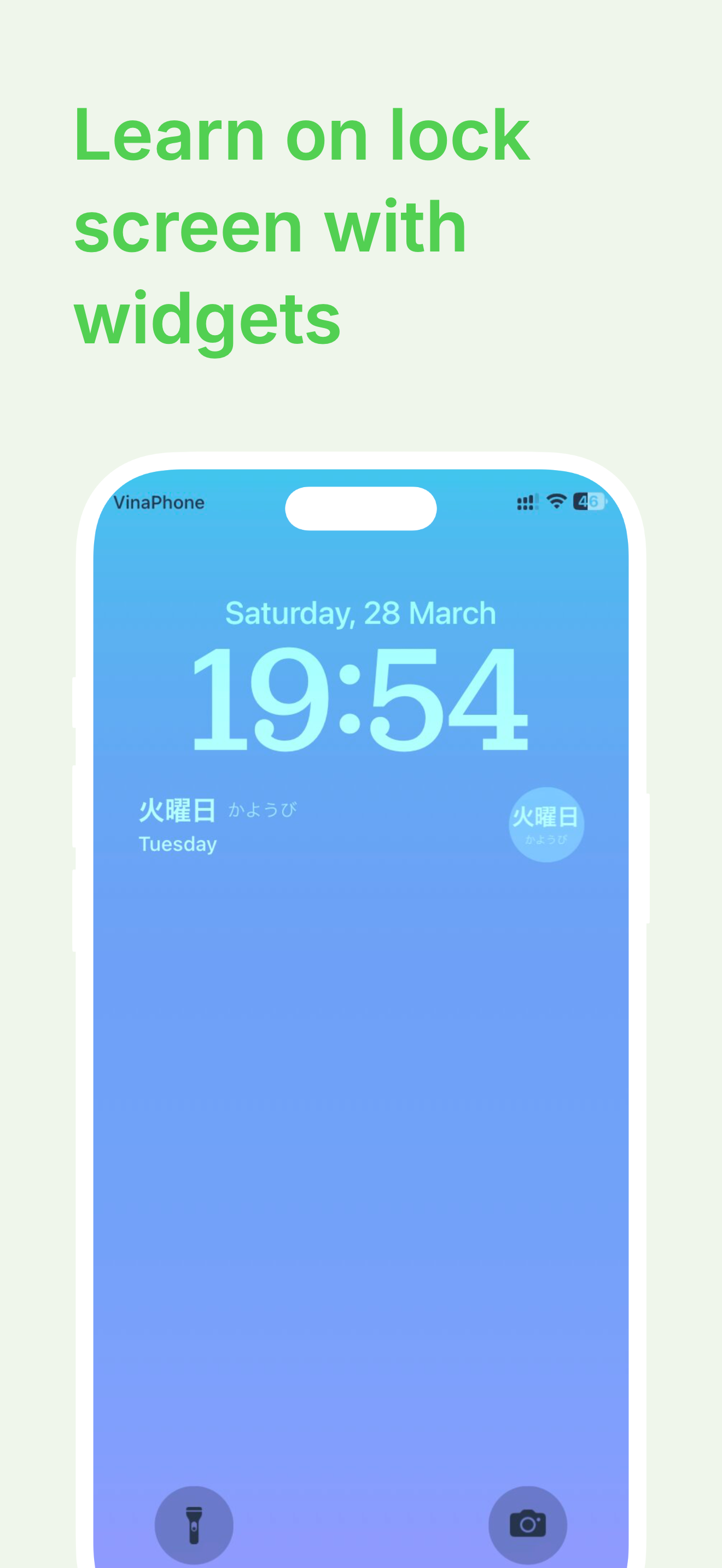
This is the foundation. Set Kanjijo’s lock screen widget to show one due kanji or vocabulary card. Every time you check the time, dismiss a notification, or unlock to open an app, you see Japanese. 80–150 micro-impressions per day, automatically.
2. The Home Screen Quiz Widget (10 seconds at a time)
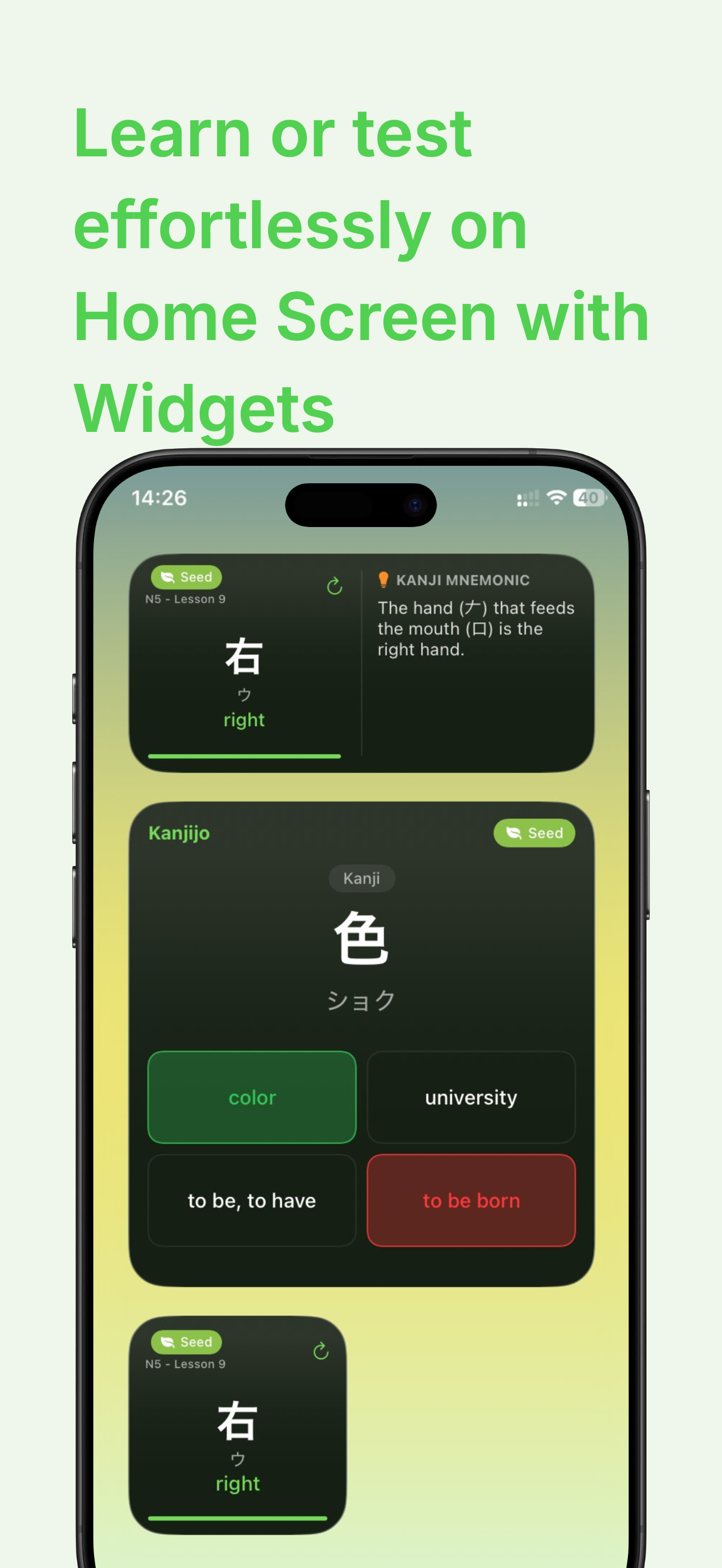
Place Kanjijo’s quiz widget directly above your most-used app. Every time you reach for Messages, Maps, or your work tool, the widget asks you a question. Answer it (10 seconds), then continue what you were doing.
Over a day, you’ll naturally answer 15–30 quiz questions without ever “sitting down to study.” These count toward your real SRS progress.
3. The 90-Second Morning Anchor
One single block of focused time per day, at the same moment every day. The classic anchor: while your coffee is brewing, while your kid is in the bathroom, while your computer boots.
Open Kanjijo. Tap “Review.” Do as many SRS cards as you can in 90 seconds. Stop when the timer ends, even if there are more due. The widgets will catch the rest throughout the day.
This single habit is the most important thing you do. It’s the only thing in the system that requires intent. Everything else is ambient.
4. The OCR “Capture Anything” Habit
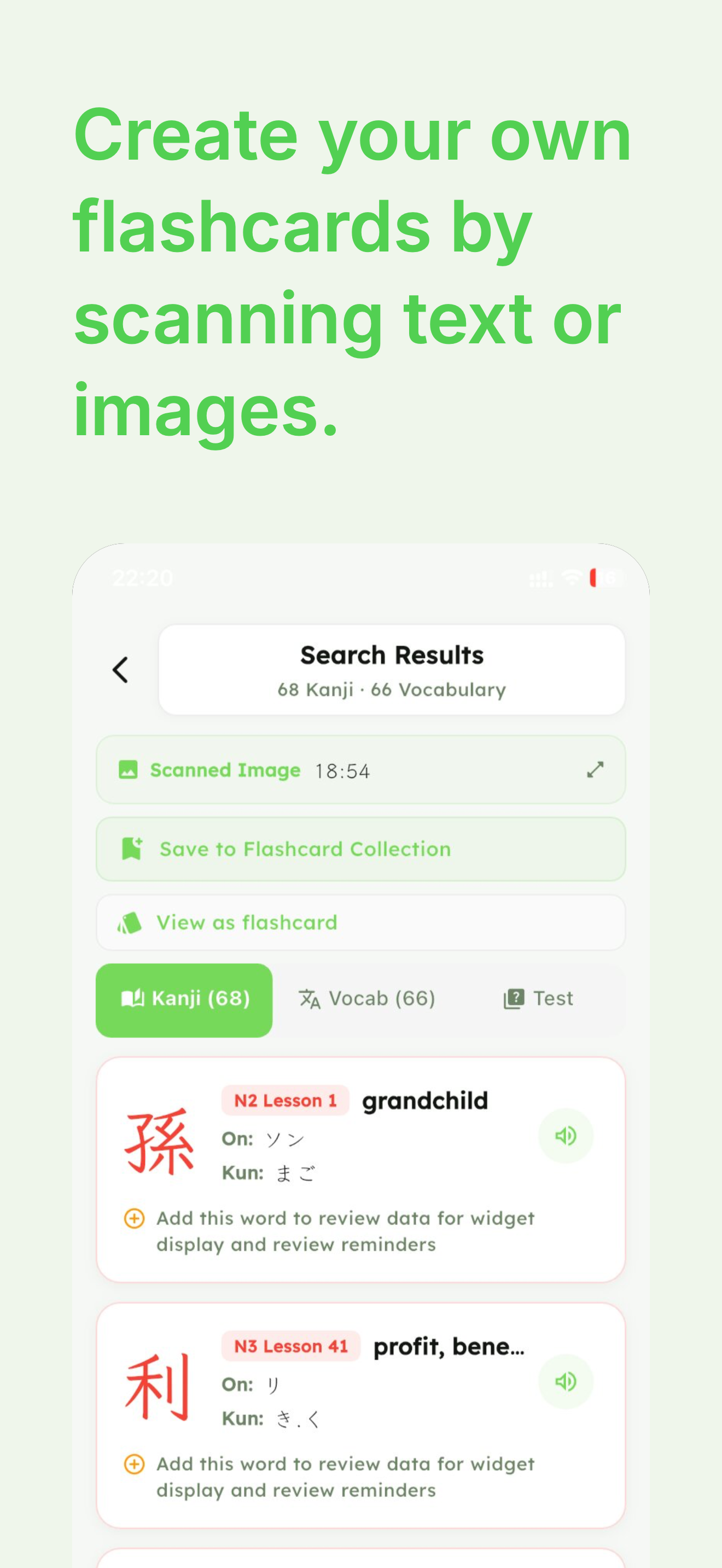
Whenever you see Japanese in the wild - a manga panel, a Japanese movie subtitle on Netflix, a sign in a video, a friend’s Instagram caption - open Kanjijo and OCR-scan it. Takes 30 seconds.
Kanjijo will break the text down word by word. Tap any unfamiliar word to add it to favorites. The SRS engine will surface it later. You just turned a 30-second curiosity into a long-term vocabulary acquisition.
5. The Bedtime Glance
The last thing your eyes see before sleep is what your brain consolidates hardest in REM. Glance at your widget for 5 seconds before putting the phone down. That’s the whole habit.
What This Looks Like on a Real Day
A real day for a parent with a full-time job, no “study slot”:
- 6:42am - Alarm. Glance at lock screen kanji. (1 impression)
- 6:50am - Coffee brewing. 90-second SRS review. (12 cards)
- 7:30am - Commute, glance phone for podcast. Quiz widget asks a question. Tap. (1 active recall)
- 9:15am - Wait for meeting to start. Quiz widget. Tap. (1 active recall)
- 11:00am–6:00pm - 50+ phone glances throughout work. Each one is a passive lock screen impression. 5 quiz widget taps total.
- 6:30pm - Cooking dinner. Notice a Japanese product label in your pantry. OCR-scan it. (3 words added)
- 9:00pm - Kid in bath. Phone in hand. 60-second Kanjijo lesson. (1 new grammar pattern)
- 10:45pm - Bedtime. 5-second widget glance. Lights out.
Total intentional time: ~3 minutes. Passive impressions: 100+. Active recalls: 15+. New material acquired: 1 grammar + 3 vocabulary.
Do that for 6 months and you’ll be at high N5 / low N4. Do it for 18 months and you’ll pass N4 cleanly. Do it for 4 years and you’ll pass N3.
Rules That Make the System Survive Bad Days
- Never make up missed days. If you skip the 90-second anchor, the next day’s anchor is still 90 seconds. No catching up. No guilt.
- Never extend a session because it’s “going well”. The whole point is sustainability. A 20-minute session today predicts skipping tomorrow.
- Never disable the widgets. They’re the load-bearing component. The 90-second anchor can flex. The widgets cannot.
- Always OCR the random Japanese you see. Curiosity-driven learning is the highest-retention mode. Don’t let it pass.
- Never compare your pace to a 4-hour-per-day learner. They have a different life. You have a different goal - sustainability over years.
Who This System Isn’t For
Honesty: if you have a JLPT exam in 90 days and you’re aiming for N2 from N4, this is not enough. You will need real focused study sessions. Zero-time mode is for the long game - building Japanese into the texture of your life so you don’t quit before the gains compound.
And gains do compound. Six months of 5-minute days don’t feel like much. The seventh month, something shifts. The kanji on the lock screen start feeling like old friends. The grammar widget stops surprising you. The OCR shows you words you already know.
You didn’t make time for Japanese. You let Japanese fill the cracks. And the cracks were enough.
Related Reading on Kanjijo
Frequently Asked Questions
Five focused minutes plus 100+ widget glances throughout the day adds up to roughly 15–20 minutes of effective study - more than enough to make steady progress through JLPT N5 to N3. The trick isn’t finding time. It’s converting time you already spend looking at your phone into Japanese exposure.
No - short, frequent exposures actually beat long, infrequent ones for retention. Spaced repetition science confirms that distributed practice (many small reviews) outperforms massed practice (one long session) for long-term memory.
One 90-second SRS session in the morning, lock screen + home screen widgets active all day, and one OCR scan of any Japanese text you encounter. That’s it. The widgets do the heavy lifting passively.
Start Learning Japanese in the Cracks
Download Kanjijo, set up the lock screen widget, and start your first 90-second session today. Your day doesn’t need to make room - Japanese will fit anyway.
Download Kanjijo Free